Electric vehicles (EVs) are rapidly transforming the global transportation industry.
With governments pushing for cleaner mobility and consumers becoming more environmentally conscious,
EV adoption is accelerating across passenger vehicles, commercial transport, and logistics fleets.
However, many people still assume that all electric vehicles are the same. In reality, EVs come in several categories depending on how they are powered, how the batteries are charged, and how they interact with conventional fuel systems.
Understanding the different types of electric vehicles helps buyers, fleet operators, and businesses make better decisions when choosing an EV.
Main Types of Electric Vehicles
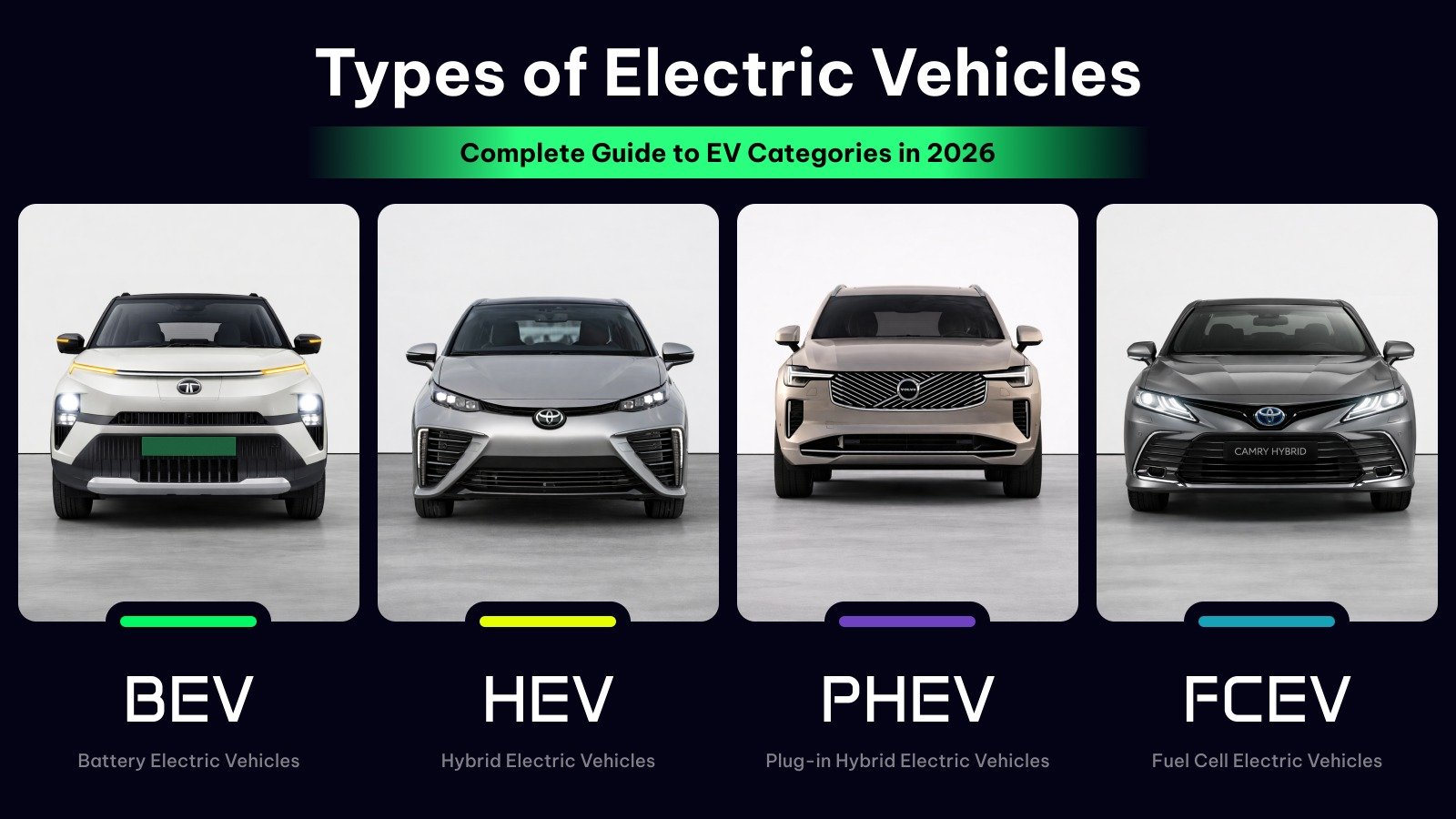
Electric vehicles are generally classified into four major categories:
1. Battery Electric Vehicles (BEV)
2. Hybrid Electric Vehicles (HEV)
3. Plug-in Hybrid Electric Vehicles (PHEV)
4. Fuel Cell Electric Vehicles (FCEV)
Each type uses electricity differently and serves different use cases.
1. Battery Electric Vehicles (BEV)
Battery Electric Vehicles are fully electric vehicles that run entirely on electricity without using petrol or diesel. Key Characteristics:
• No internal combustion engine
• Runs completely on electricity
• Zero tailpipe emissions
• Lower maintenance compared to petrol vehicles
Examples include Tesla Model 3, Tata Nexon EV, Hyundai Kona Electric, and MG ZS EV.
Advantages:
• Lowest operating cost
• Environment friendly
• Smooth and silent driving experience
Limitations:
• Charging infrastructure still expanding
• Charging time can be longer than refueling
2. Hybrid Electric Vehicles (HEV)
Hybrid Electric Vehicles combine a traditional internal combustion engine with an electric motor.
The electric motor assists the engine during acceleration and low-speed driving, which improves fuel efficiency and reduces emissions.
Key Characteristics:
• Uses both fuel engine and electric motor
• No external charging required
• Better fuel efficiency than conventional cars
Examples include Toyota Prius, Toyota Camry Hybrid, and Honda City Hybrid.
3. Plug-in Hybrid Electric Vehicles (PHEV)
Plug-in Hybrid Electric Vehicles combine the features of both BEVs and HEVs.
They have an electric motor and battery like a BEV, but they also include a petrol or diesel engine as backup. Key Characteristics:
• Electric motor + fuel engine
• Battery can be charged externally
• Can drive short distances in electric-only mode
Examples include BMW X5 xDrive45e, Volvo XC90 Recharge, and Mitsubishi Outlander PHEV.
4. Fuel Cell Electric Vehicles (FCEV)
Fuel Cell Electric Vehicles use hydrogen gas to generate electricity instead of storing energy in batteries.
Inside the vehicle, hydrogen reacts with oxygen in a fuel cell to produce electricity that powers the motor. The only emission is water vapor.
Examples include Toyota Mirai and Hyundai Nexo.
Advantages:
• Very fast refueling
• Long driving range
• Zero emissions
Limitations:
• Hydrogen infrastructure is limited
• High vehicle cost
Conclusion
Electric vehicles are no longer limited to a single category. Today, buyers can choose from battery electric vehicles, hybrids, plug-in hybrids, and hydrogen fuel cell vehicles.
As governments and industries accelerate the transition to cleaner mobility, EVs will play a critical role in shaping the future of transportation and sustainable energy.
Understanding the different types of electric vehicles helps consumers, businesses, and policymakers make informed decisions in this rapidly evolving industry.