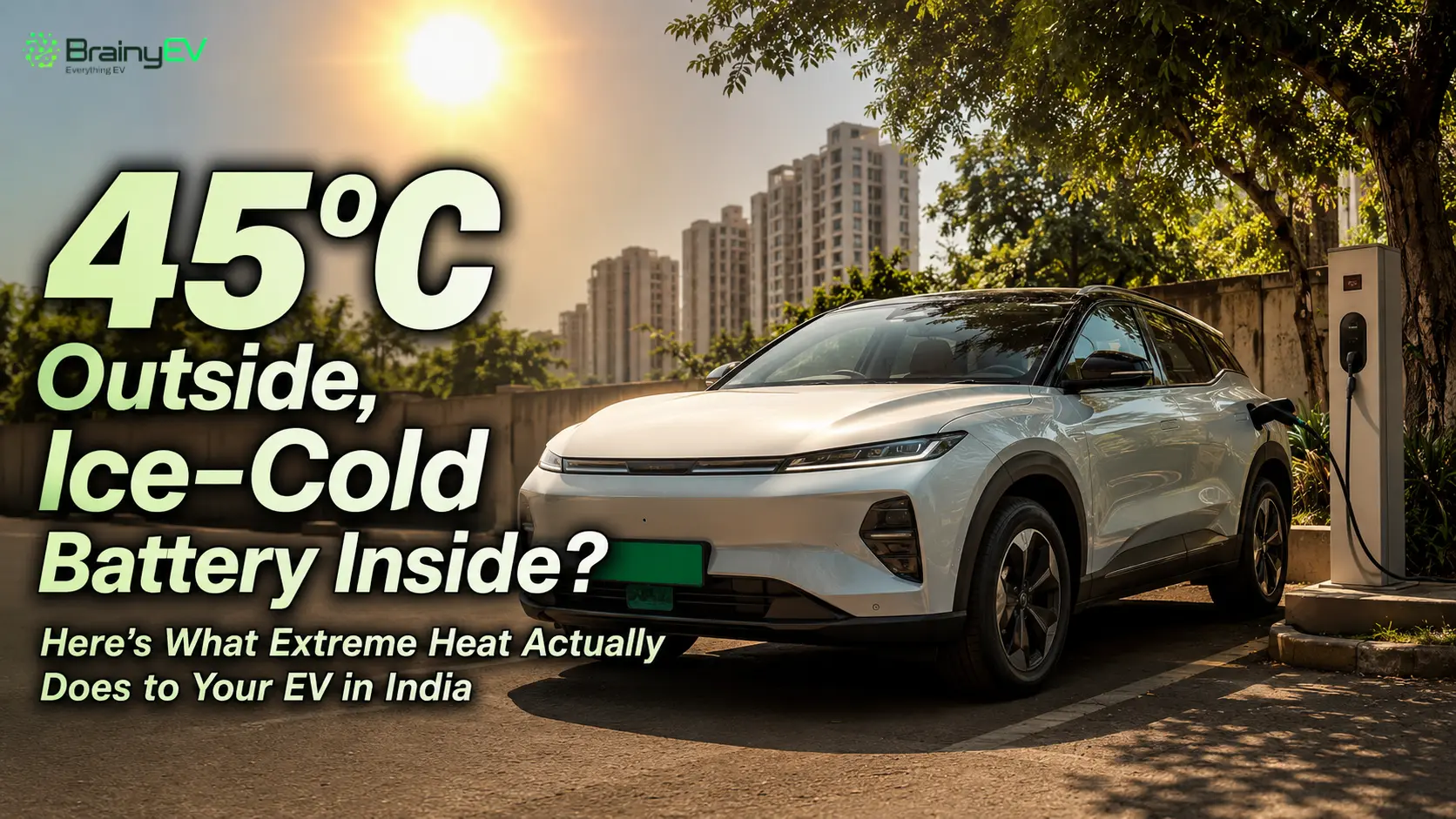
Indian summers hit differently. In Delhi NCR, Rajasthan, Gujarat or Haryana, outdoor temperatures regularly climb to 45°C-48°C. Your electric vehicle sits in that heat, sometimes under direct sun or in a poorly ventilated parking spot. Many owners start wondering: Is the battery silently cooking? Will charging damage it? Does EV performance in hot weather drop permanently?
The short answer is that modern EVs are built to handle this. But heat still affects the battery health over time if you ignore a few simple habits. This guide explains exactly what happens, how the EV battery cooling system works, and what every Indian EV owner should do.
Why Indian Summers Are Harder on EV Batteries
Most online EV advice comes from Europe or North America, where summer highs stay around 25-35°C. But India is different. High ambient temperature combines with:
- Direct sunlight on parked cars
- Hot basement or terrace parking
- Voltage fluctuations and sudden power restoration
- Chargers often installed in closed or poorly ventilated spaces
Lithium-ion batteries (LFP or NMC) face two main effects from heat: faster chemical ageing of the electrolyte and higher internal resistance during charging. That is why you may notice slower charging speeds on a 45°C afternoon. The car is not faulty. It is protecting itself.
How Modern EVs Prevent Heat-Related Battery Damage
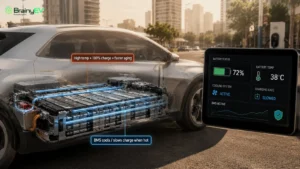
Modern EVs Use Battery Management Systems, Charging Controls, and Cooling Systems to Protect the Battery from Excessive Heat
Heat accelerates a natural ageing process. The combination that causes the most long-term capacity loss is:
- High temperature + high state of charge (near 100%)
- High temperature + fast charging right after a long drive
The battery management system constantly watches cell temperature, current and voltage. When things get too hot, it can reduce the charging speed, pause charging or activate the cooling system. These are normal protective actions of an EV and not a defect.
EV battery overheating does not usually mean sudden failure. Damage is gradual and comes from repeated high-temperature charging habits, not one hot afternoon.
What Happens When an EV Battery Gets Too Hot?
Every modern electric vehicle has an EV battery cooling system (also called the thermal system cooling for electric vehicle or battery cooling system electric vehicle). It keeps the pack within a safe temperature window whether the car is driving, parked or charging.
In extreme heat, the system may:
- Run cooling fans longer
- Limit charging current
- Delay or pause charging until temperatures drop
This is why EV performance in hot weather can feel different. Slower charging slightly reduces peak power on a very hot day. The battery cooling system in an electric vehicle is doing its job. LFP batteries generally tolerate heat better than NMC, so owners of NMC cars benefit even more from careful summer habits.
Best Time to Charge an EV in Indian Summers
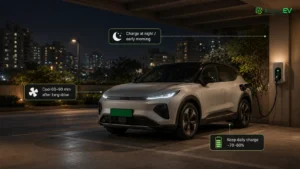
The Recommended Summer Charging Habits, from Charging During Cooler Hours to Avoiding Fast Charging on a Hot Battery
You can safely charge your EV even at 45°C. The BMS and quality chargers have multiple temperature and current protections. The real risk is long-term battery degradation when a hot battery is repeatedly charged to 100% or plugged in immediately after a long, hot drive.
Safe practices for Indian summers:
- Prefer late evening, night or early morning charging
- Let the car cool for 60-90 minutes after a long drive before plugging in
- Park in shade or covered parking whenever possible
- Keep daily charge levels around 70-80% instead of 100%
- Avoid frequent DC fast charging when the battery is already hot or outdoor temperature is above 40°C
Night charging is ideal because ambient temperatures are lower and the car has usually cooled down.
Not sure where to find your nearest EV charging station? Find them easily using BrainyEV Nearby EV Stations Finder.
How Heat Affects the Charger and Cables
The charger and cable also suffer in Indian heat. Electronics can reach internal temperatures above 70°C in a sealed metal box or sun-facing wall. This can cause thermal cut-off, cable heating or premature wear.
Install the home charger in a covered, well-ventilated location, never in direct sunlight or in a sealed cabinet. The casing should feel warm and never too hot to touch comfortably. Use proper earthing, surge protection and the correct wire gauge. Summer voltage fluctuations damage chargers more often than heat alone.
Signs Your EV Battery is Overheating
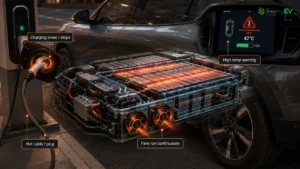
Recognise EV Battery Overheating Through Charging Interruptions, Temperature Alerts, and an Unusually Hot Charging Cable
Watch for these clear indicators that temperatures are climbing:
- Charging speed suddenly drops or stops and restarts
- Cooling fans run continuously even when the car is parked
- Dashboard warning for high battery temperature
- Charging cable or plug feels excessively hot
- Error notifications appear on the vehicle screen or app
These are protective actions by the system, not defects. If you notice them:
- Stop charging if it is in progress
- Move the car to shade if possible
- Wait 60-90 minutes for the pack to cool
- Restart charging only after temperatures normalise
- Check charger ventilation and cable condition
Paying attention to these signs helps prevent unnecessary stress on the EV battery cooling system and supports better long-term EV performance in hot weather.
Practical Summer Checklist for Indian EV Owners
- Park in shade
- Wait 60-90 minutes after driving before charging
- Charge at night when possible
- Limit daily charge to 70-80%
- Ensure good ventilation around the charger
- Install surge protection
- Inspect cables and plugs monthly for discolouration or unusual heat
These small habits reduce EV battery overheating stress and help maintain better EV performance in hot weather over years of ownership.
Looking After Your EV in Extreme Heat
Understanding EV battery overheating, respecting the limits of the battery cooling system electric vehicle, and following simple cooling-down and charging habits go a long way. The thermal system cooling for electric vehicle is already working hard for you, so your job is to give it a fair chance by avoiding the worst combinations of heat, high state of charge and immediate post-drive charging.
For Indian EV owners seeking practical guidance and reliable solutions tailored to local conditions, explore more resources and support at BrainyEV.
Whether you are checking EV performance in hot weather, understanding your EV battery cooling system, or looking for everyday tips that protect battery life, BrainyEV focuses on clear, India-specific information.
Frequently Asked Questions
Is it dangerous to charge an EV in 45°C heat?
No, it is not inherently dangerous, but it causes faster battery ageing and slower charging speeds. Modern electric cars use built-in safety controls to protect themselves.
Does extreme heat damage EV batteries?
Prolonged exposure to excessive heat can accelerate battery degradation over time, which is why proper charging practices are important.
Should I avoid fast charging during summer?
Although occasional DC fast charging is safe, frequent DC fast charging in extreme heat can raise battery temperatures. It’s best to use it only when necessary and choose AC charging or cooler times of the day whenever possible.
What is the best time to charge an EV during Indian summers?
The best time to charge an EV during Indian summers is late night, early morning, or late evening, when the ambient temperatures are lower. Charging during these times reduces thermal stress on the battery and prevents accelerated degradation.
Can charger quality affect summer charging safety?
Yes. High-quality chargers with built-in protection systems are better equipped to handle extreme temperatures and provide safer charging experiences.
Related Reads: