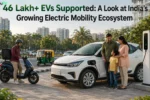
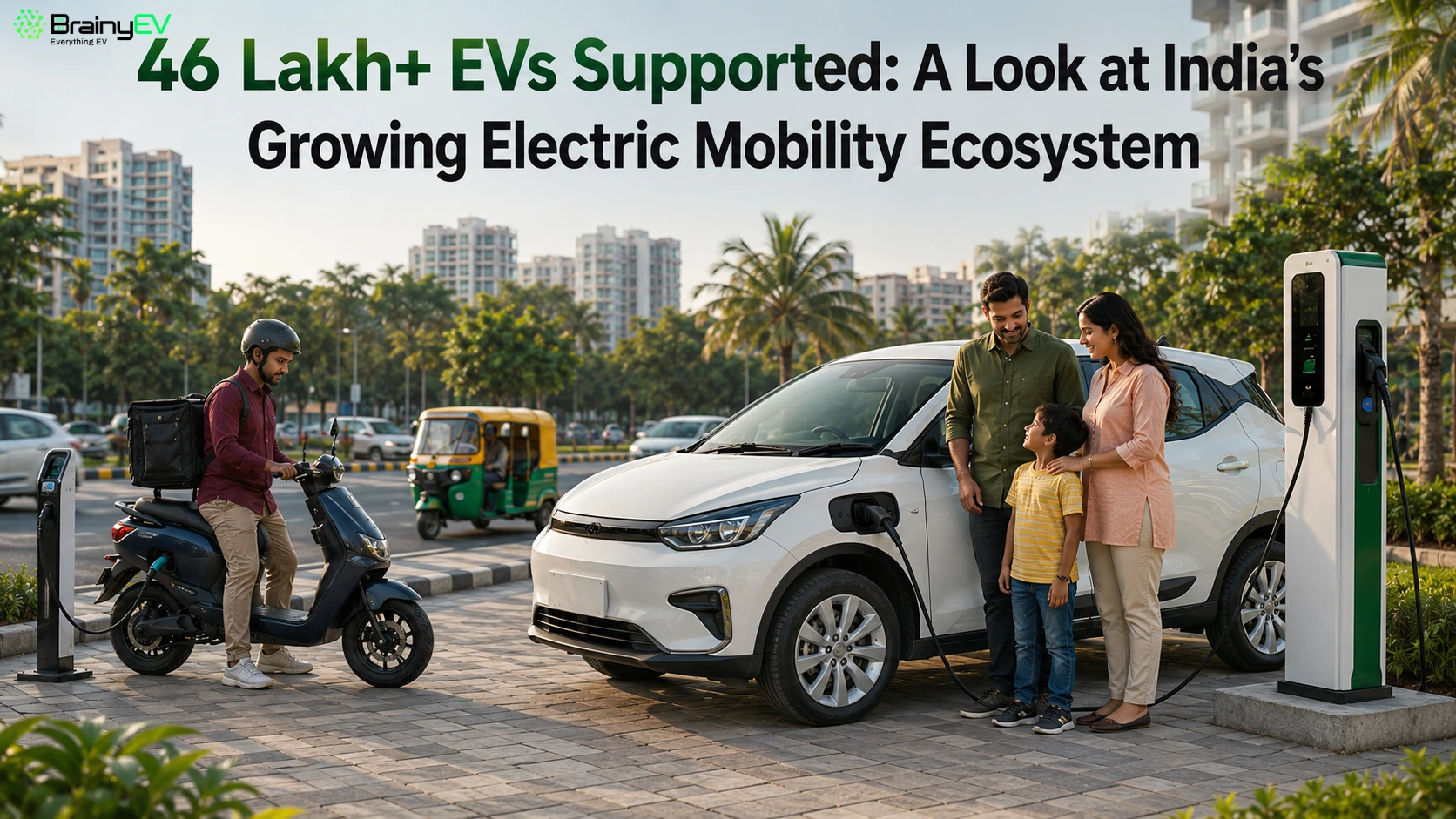
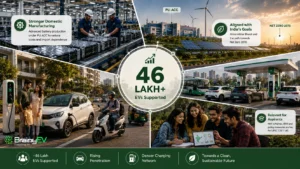
India’s shift to cleaner transport has crossed an important mark. More than 46 lakh electric vehicles have been supported under various schemes of the Ministry of Heavy Industries (MHI). This shows steady policy work, rising public interest and more practical options for everyday users. India’s electric vehicle ecosystem is now within reach for ordinary buyers on the road.
For many people across the country, Electric Vehicles are becoming a realistic choice. Lower running costs, quieter performance and better access to incentives make EVs in India useful for daily commuting, last-mile work and family travel. The story of EV Growth rests on clear government programmes and expanding local manufacturing.
How Policy Support Built the Foundation
The journey began with the National Electric Mobility Mission Plan, or NEMMP 2020. It set the direction for clean mobility and domestic production. The FAME India scheme then gave direct support to buyers and helped create early charging points.
Key results from major MHI schemes include:
- FAME India Phase-II supported around 16.72 lakh electric vehicles.
- The same scheme helped deploy thousands of electric buses and public charging stations.
- The PM E-DRIVE Scheme aims to support roughly 26.59 lakh electric vehicles so far, with a target of roughly 28.30 lakh across two-wheelers, three-wheelers, trucks, buses and ambulances.
- PM E-DRIVE also allocates funds for charging infrastructure and testing facilities.
- The PM e-Bus Sewa scheme offers payment security so operators can deploy more electric buses with greater confidence.
- Together, these programmes form the core of the current EV ecosystem.
Complementary manufacturing programmes add further strength:
- The PLI-Auto Scheme encourages production of advanced automotive technology products, including electric vehicles.
- The PLI-Auto Scheme has supported the sale of around 21.30 lakh electric vehicles, alongside its broader push for domestic manufacturing.
- The PLI ACC Scheme focuses on domestic capacity for Advanced Chemistry Cell Battery manufacturing.
- These steps support Atmanirbhar Bharat and the National Mission on Manufacturing.
- They also help India move toward its Net Zero 2070 goal by cutting oil imports and transport emissions.
- CAFE Norms push manufacturers to improve efficiency across their vehicle range, which naturally increases the availability of electric options.
Expanding Access and Infrastructure
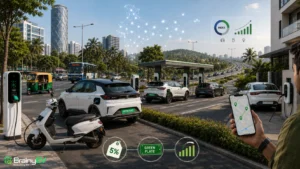
Charging infrastructure has grown alongside vehicle numbers. As of early August 2026, more than 67,000 EV chargers were installed across States and Union Territories. This includes stations that support battery swapping.
Practical points about the network:
- Public and private efforts continue to add locations in cities and along highways.
- Tools such as e-Amrit help users find nearby charging points.
- GST on electric vehicles and chargers remains at 5 percent.
- Many States offer extra support, such as road-tax exemptions or green licence plates.
- These measures lower the entry cost for first-time buyers of Electric Vehicles.
The India Electric Mobility Index, launched by NITI Aayog, tracks progress across States and Union Territories. It measures three main areas:
- Transport electrification
- Charging infrastructure readiness
- Research and innovation activity in eMobility
This index helps show where the overall EV ecosystem is advancing and where more work may still be useful. States with clear policy frameworks have emerged as important centres for both adoption and manufacturing.
Looking for clear, practical guidance on electric mobility in India?
BrainyEV helps users understand available options, locate charging points and explore how different vehicle types fit daily needs.
Whether you are new to EVs or already considering a switch, BrainyEV offers straightforward information tailored to the Indian context so you can decide what works best for your routine and budget.
Choosing What Suits Your Needs
The positive story of EVs in India rests on real choices rather than one fixed answer. Different vehicle types serve different purposes.
Common patterns many buyers notice:
- Two-wheelers work well for short city trips because of low operating costs.
- Three-wheelers continue to serve last-mile and commercial needs.
- Four-wheelers and buses are finding their place in family and public transport use.
- Battery technology, range and charging habits vary from one option to another.
- The best fit depends on distance travelled, access to home or workplace charging, and local incentives available.
Helpful points to consider while deciding:
- Check current central and State incentives under MHI schemes such as the PM E-DRIVE Scheme.
- Note the growing number of public chargers and swapping stations.
- Look at the total cost of ownership; electricity is usually cheaper than petrol or diesel over time.
- Review local manufacturing progress under the PLI-Auto Scheme and PLI ACC Scheme, which supports better availability of parts and vehicles.
- Refer to the India Electric Mobility Index to understand how your State is progressing in the overall EV ecosystem.
- Compare features, range and charging time on your own terms without pressure.
There is no single “right” vehicle or charger. The strength of India’s Electric Vehicles Ecosystem lies in the expanding range of options. Policy frameworks such as NEMMP 2020, FAME India, PM E-DRIVE Scheme, PM e-Bus Sewa, National Mission on Manufacturing and CAFE Norms simply make more of those options accessible and affordable.
Looking Ahead
EV Growth continues as domestic manufacturing deepens and charging networks expand. Key directions include:
- Greater focus on Advanced Chemistry Cell Battery production under the PLI ACC Scheme to lower costs and reduce import dependence.
- Continued alignment with Atmanirbhar Bharat and the path toward Net Zero 2070.
- Rising vehicle numbers and a denser network of charging points that make daily use easier.
- Relevance for students and aspirants preparing for UPSC CSE or IAS examinations, where the evolution of MHI schemes, the India Electric Mobility Index and related policy measures form part of current affairs on sustainable development and industrial policy.
The numbers already show meaningful progress: more than 46 lakh vehicles supported, rising penetration, and a steadily denser network of charging points. The EV ecosystem is becoming more complete, practical and relevant to daily Indian life.
If you are exploring electric mobility for the first time or looking to understand how current schemes and infrastructure can support your next vehicle decision, BrainyEV is here to help.
Visit BrainyEV for clear information on the growing India’s Electric Vehicles Ecosystem, available support under MHI schemes, charging access and practical points to consider. Start with the facts that matter to you, and choose the path that fits your needs.
Frequently Asked Questions
What does “46 lakh+ EVs supported” mean?
It refers to the cumulative number of electric vehicles that have received incentives or support under various Ministry of Heavy Industries (MHI) schemes, including FAME India and the PM E-DRIVE Scheme.
How has the charging network grown?
As of August 2026, over 67,000 EV chargers have been installed across the country, including facilities at battery-swapping stations.
What is the India Electric Mobility Index?
It is a NITI Aayog tool that scores States and Union Territories on transport electrification, charging infrastructure readiness and research and innovation in eMobility.
Which major schemes currently support electric vehicles?
Key programmes include the PM E-DRIVE Scheme, PM e-Bus Sewa, PLI-Auto Scheme, PLI ACC Scheme and earlier efforts under FAME India and NEMMP 2020.
Why is domestic battery manufacturing important?
The PLI ACC Scheme targets Advanced Chemistry Cell Battery production in India. Local capacity can help reduce costs, improve supply security and support wider EV Growth under Atmanirbhar Bharat.
How do CAFE Norms relate to electric vehicles?
Corporate Average Fuel Efficiency (CAFE) Norms encourage manufacturers to improve overall fleet efficiency, which supports greater production and adoption of Electric Vehicles.