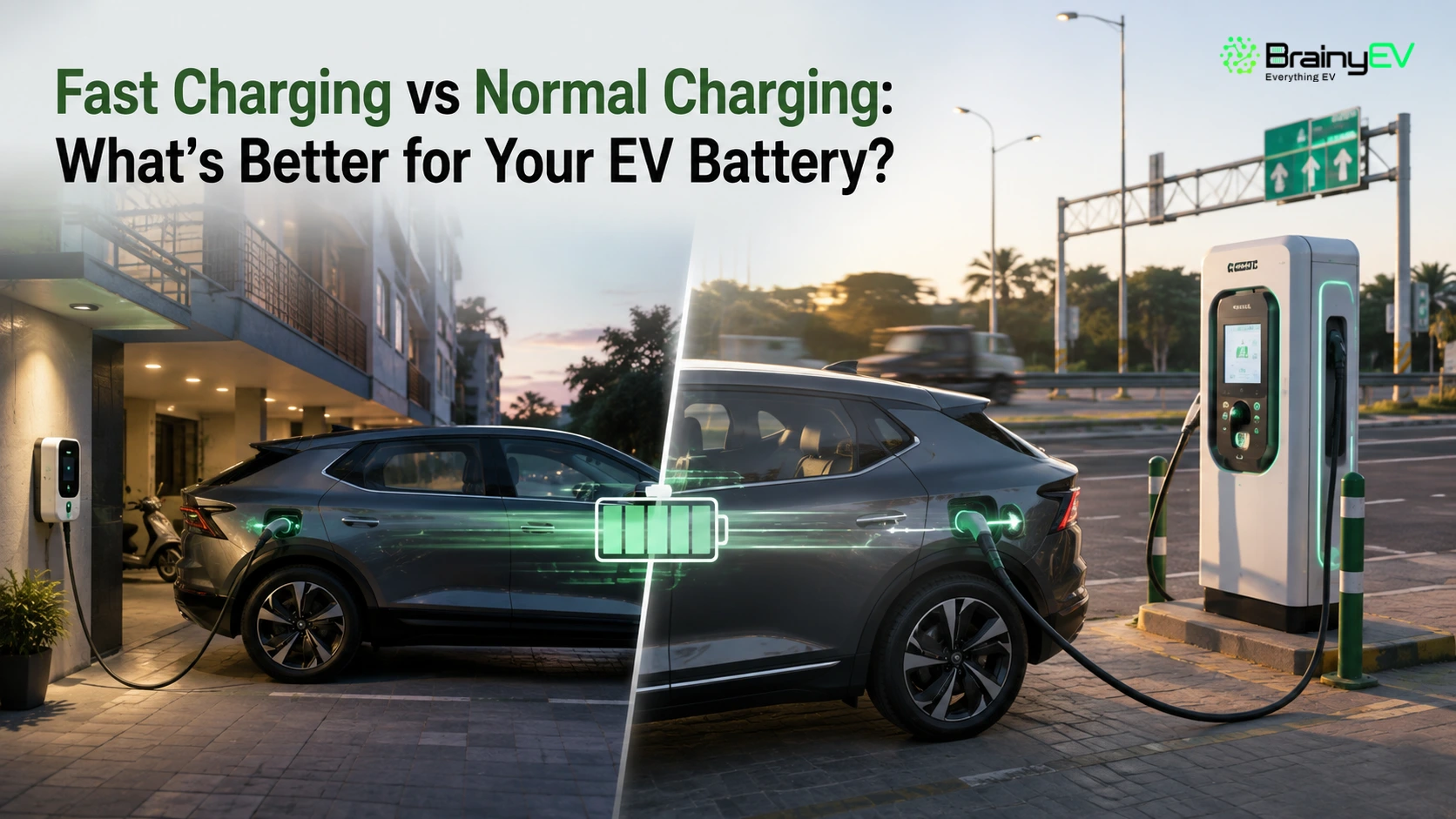
Many EV owners and people considering an electric vehicle in India find themselves asking about fast charging vs normal charging. The question usually comes from a practical place: You want to know how each method fits into your daily life and what it means for the long-term health of your EV’s battery.
The positive reality is that modern electric vehicles are built with sophisticated battery management systems that handle both styles of charging effectively. Rather than viewing one approach as superior, the right choice ultimately depends on how you use your EV. Consider factors such as your daily driving distance, access to reliable charging stations, charging habits, and how much importance you place on long-term battery performance. Understanding how each approach affects your EV can help you choose a routine that fits naturally into your lifestyle while supporting efficient EV battery performance.
How the Two Charging Methods Work
Normal charging, commonly referred to as AC charging or Level 2 charging, is the method most people use at home or at the workplace. Electricity from the grid enters the vehicle, and the car’s onboard charger converts it into the form the battery can store. This process is steady and takes several hours, which is why many owners simply plug in overnight.
EV fast charging, also known as DC fast charging, works differently. An external unit converts the power before it reaches the vehicle and delivers a higher volume of energy in a shorter time. Public stations offering EV fast charging can add substantial range in 20 to 40 minutes, depending on the vehicle and the station’s power output.
Both methods support everyday mobility; they simply create different conditions inside the battery pack for short periods.
What the Recent Data Says About EV’s Battery Health
A frequent concern is: Is fast charging bad for an EV battery?
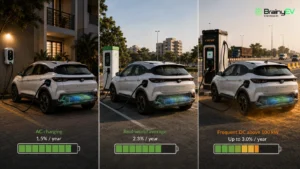
A 2026 Geotab analysis covering more than 22,700 electric vehicles across 21 makes and models found that average annual battery capacity loss stands at around 2.3%. Vehicles that relied mainly on lower-power or AC charging showed roughly 1.5% yearly degradation. Those that used high-power DC sessions above 100 kW frequently recorded rates closer to 3.0%.
Does fast charging reduce EV battery life?
Occasional use produces only a modest additional effect for most drivers. Heat plays a larger role than charging speed alone, which is relevant in India’s warmer climate. Modern thermal management systems actively regulate temperature during EV fast charging sessions, helping protect the cells. Keeping the battery away from prolonged periods at very high or very low states of charge also contributes to a steadier EV battery lifespan over the years.
Simple Practices That Support EV Battery Maintenance
Good EV battery maintenance does not require complicated routines. A few consistent habits work well regardless of which charging method you use more often:
- Use normal charging for regular daily top-ups whenever time permits, as the slower process generates less heat.
- Turn to EV fast charging when you need a quicker boost for longer journeys or unexpected schedule changes.
- Try not to leave the battery at 100 percent or near empty for extended periods regularly.
- Park in the shade when possible and allow the vehicle’s preconditioning features to prepare the battery before charging in hot weather.
- Refer to the manufacturer’s recommendations in the owner’s manual for model-specific guidance.
These practices help maintain consistent EV battery performance and support the overall durability of the pack.
Matching Charging Choices to Everyday Life in India
Which is better, fast charging or normal charging?
The answer depends on how and where you drive. For city commuting and routine local travel, many owners find that normal charging at home or the workplace covers their needs comfortably and keeps daily costs predictable. When weekend trips, inter-city travel, or tight schedules arise, EV fast charging offers the flexibility that makes electric mobility practical.
India’s expanding network of public charging points and the growing availability of home chargers give drivers more options than before. Many people naturally develop a mixed approach: normal charging for most days and EV fast charging when convenience or distance requires it. This balance allows owners to enjoy the strengths of both methods without forcing a single rigid style.
Cost also enters the decision for many households. Home normal charging usually runs on residential electricity rates, while public EV fast charging carries a higher per-unit cost that reflects the infrastructure involved. The difference becomes one more factor individuals weigh according to their budget and usage pattern.
Choosing an EV is about more than comparing specifications on paper. Understanding how a vehicle performs in everyday conditions, what it costs to run, and how easily you can access charging can help you make a more practical decision.
BrainyEV helps simplify this process with EV comparisons, charging station maps, road-trip planning, and cost calculators tailored to the realities of driving an EV in India.
Looking at the Bigger Picture for Battery Longevity
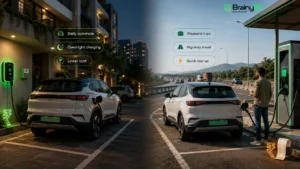
Fast charging vs normal charging is less a matter of right versus wrong and more a question of matching the tool to the situation. Normal charging supports gentle, everyday conditions that many drivers appreciate for long-term EV battery lifespan. EV fast charging delivers speed and convenience when time is limited or distances are greater. Recent data confirms that modern batteries remain durable under mixed real-world use, with average degradation staying within levels that support many years of reliable service.
Temperature management, thoughtful state-of-charge habits, and a sensible mix of charging methods together help preserve EV battery performance. Simple attention to EV battery maintenance goes a long way in keeping the vehicle feeling consistent year after year. In India’s climate and driving conditions, these small choices add up without requiring major lifestyle changes.
Making Smarter EV Charging Decisions
Choosing an EV is about more than comparing specifications on paper. Understanding how a vehicle performs in everyday conditions, what it costs to run, and how easily you can access charging can help you make a more practical decision.
BrainyEV is designed to support every stage of that journey with practical tools for comparing vehicles, locating chargers, planning routes, and understanding costs.
Visit BrainyEV to explore the options and move forward with greater clarity and confidence.
Frequently Asked Questions
Is fast charging bad for your EV battery?
Not in moderation. Occasional fast charging has only a modest effect on long-term battery health for most drivers. The bigger factors are heat exposure and how often a battery sits at very high or very low charge levels.
Does fast charging reduce EV battery life?
Frequent, habitual use of high-power DC charging (above 100 kW) is linked to faster degradation, around 3.0% annually versus roughly 1.5% for vehicles that mostly use AC charging, according to Geotab’s 2026 study. Occasional use has a much smaller impact.
Which is better, fast charging or normal charging?
Neither is universally “better”; normal charging suits daily routines and gentler long-term battery conditions, while fast charging offers speed and flexibility for longer trips. Most owners in India settle into a mix of both.
Is fast charging more expensive than normal charging?
Yes, generally. Home charging runs on residential electricity rates, while public fast-charging stations carry a higher per-unit cost reflecting the infrastructure involved.
You Might Also Like:
How Much Does It Actually Cost to Charge an EV in Delhi?