Buying an electric car in India often starts with one big question: How far will it actually go? Brochure numbers look impressive, but everyday driving tells a different story. Understanding EV range in India means looking beyond the certified figures and focusing on what happens on real roads, in real traffic, and in real weather. This guide breaks down exactly what you need to know so you can choose and drive smarter.
Why Certified Numbers Differ from Daily Driving
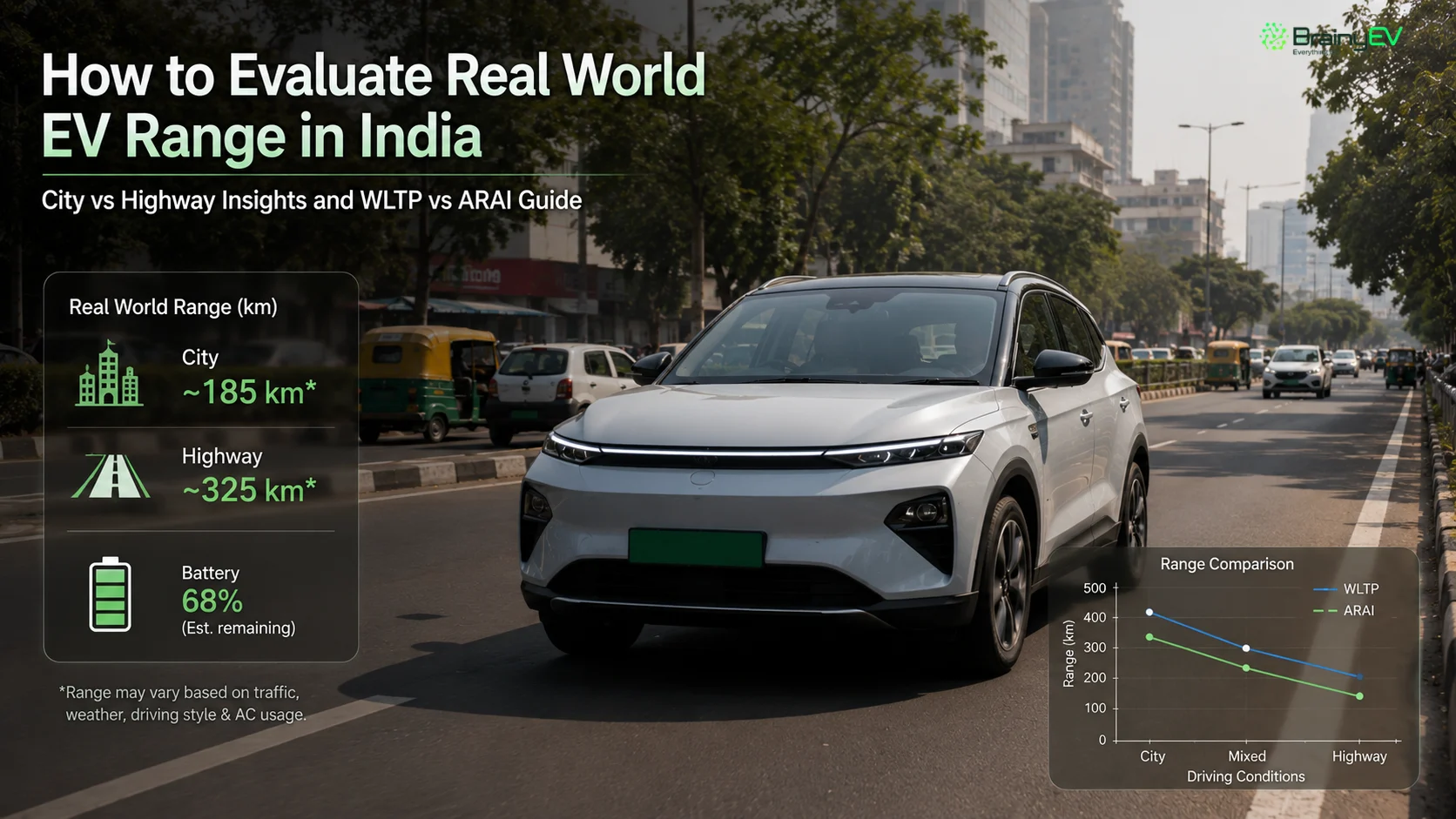
Manufacturers quote ranges based on lab tests. In India, the standard is ARAI (Automotive Research Association of India), which runs vehicles on a chassis dynamometer under controlled conditions, moderate speeds, no air conditioning, and ideal temperatures. Many imported or premium models also list WLTP (Worldwide Harmonised Light Vehicle Test Procedure) figures, which are closer to mixed driving but still not perfect for Indian roads.
The key difference in WLTP vs ARAI is that WLTP includes more varied speeds and is generally more realistic for global conditions, while ARAI is tailored to Indian certification requirements. Independent tests and owner data consistently show that real world EV range typically lands at 65-80% of the ARAI claim, depending on the car, season, and usage. Take the Tata Tiago EV (24kWh pack). ARAI certifies it at 285 km, but Autocar India’s real-world combined city-highway test recorded just 187 km, which is about 66% of the claimed figure, right at the lower end of the 65-80% range most owners report.
A practical rule many buyers use is ARAI range multiplied by 0.70 for mixed Indian city driving, or multiply WLTP by 0.80 to 0.85 for real-world use. Always keep a 20-25% buffer when planning longer trips.
For accurate comparisons and ownership insights tailored to local conditions, platforms like BrainyEV help buyers cut through the brochure claims.
Popular EVs Compared: Claimed vs Real-World Range
When you’re shortlisting an electric car, the brochure number is only half the story. Looking at how different models actually perform in daily Indian conditions helps you pick the one that matches your needs better. Here’s a quick side-by-side look at some popular options:
|
Model |
Battery |
ARAI / Claimed |
Typical Real-World Range |
Starting Price (ex-showroom) |
|
Mahindra BE 6 |
79 kWh |
683 km |
440-506 km |
₹18.90 lakh – ₹28.49 lakh |
|
Tata Sierra EV |
75 kWh |
665 km |
440-530 km |
₹18.79 lakh – ₹26.48 lakh |
|
Tata Harrier EV |
75 kWh |
627 km |
420-450 km |
₹21.69 lakh – ₹30.43 lakh |
|
Maruti e Vitara |
61 kWh |
543 km |
400-450 km |
₹15.99 lakh – ₹20.01 lakh |
|
MG ZS EV |
50.3 kWh |
461 km |
320-351 km |
₹17.99 lakh – ₹20.75 lakh |
City Driving vs Highway Reality
EV range in city conditions often surprises new owners positively. Stop-go traffic allows regenerative braking to recover energy that would be lost in a petrol car. Many mass-market EVs return closer to 70-80% of their certified range in moderate urban use with sensible driving.
On the open road, the picture changes. EV range on highway suffers more because constant high speeds leave little opportunity for regen and air resistance rises quickly. Independent road tests of popular models frequently show highway figures 20-35% below ARAI claims when AC is on and speeds stay above 90 km/h. Planning highway trips therefore requires a more conservative estimate and awareness of charging stops.
When evaluating options for daily commuting or weekend getaways, checking detailed range breakdowns on BrainyEV can clarify which models suit your mix of city and highway use.
Weather Effects, Including Cold Conditions
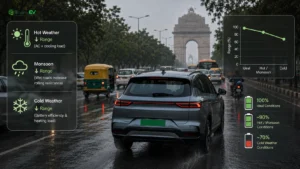
India’s climate extremes affect batteries more than many expect. Hot weather forces the thermal management system and AC to work harder, reducing efficiency. Monsoon conditions can slightly increase rolling resistance on wet roads.
Cold weather EV range is especially noticeable in North Indian winters when temperatures drop to single digits. Chemical reactions inside lithium-ion batteries slow down, usable capacity falls, and cabin heating (especially resistive heaters) draws significant power. Range reductions of 15-30% are commonly reported in places like Delhi-NCR during peak winter mornings. Preconditioning the cabin while the car is still plugged in is one of the simplest ways to protect cold weather EV range. Heat-pump equipped models generally fare better than those with basic resistive heating.
Understanding these seasonal shifts helps set realistic expectations for EV range in India across the year.
Practical Ways to Assess and Improve Range
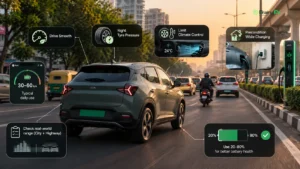
Before buying, ask for both ARAI and any available real-world or C75-cycle figures. Look at independent tests from trusted publications that measure city and highway efficiency separately. Calculate your own daily needs: most Indian urban drivers cover 30-60 km a day, so even a conservative real-world figure is usually more than enough for commuting plus a buffer.
Once you own the car, simple habits help:
- Drive smoothly and use Eco or Range mode.
- Maintain correct tyre pressure.
- Limit continuous high-intensity climate control.
- Precondition while charging.
- Avoid frequent 100% charges for daily use; 20-80% is kinder to the battery for longevity.
Newer battery chemistries (especially LFP packs) and improved thermal management in recent models have narrowed the gap between claimed and delivered range. Many 2025-2026 launches now offer clearer real-world guidance alongside official numbers, and charging networks continue to expand, reducing anxiety on longer journeys.
For the latest model comparisons, ownership cost calculators, and practical range insights specific to Indian conditions, visit BrainyEV.
Making an Informed Choice
Evaluating EV range in India is less about chasing the highest brochure number and more about matching realistic performance to your driving pattern. Factor in city versus highway mix, local climate, and how you use climate control. Remember that WLTP vs ARAI differences exist, and real world EV range will always sit below the lab figure. With sensible expectations and a few smart habits, most modern EVs comfortably handle Indian daily life and weekend trips.
Ready to explore models that deliver dependable performance without the guesswork? Head over to BrainyEV today for clear, India-focused guidance on range, efficiency, and ownership. Whether you are comparing EV range in city figures or planning for EV range on highway runs, the right information is just a click away.