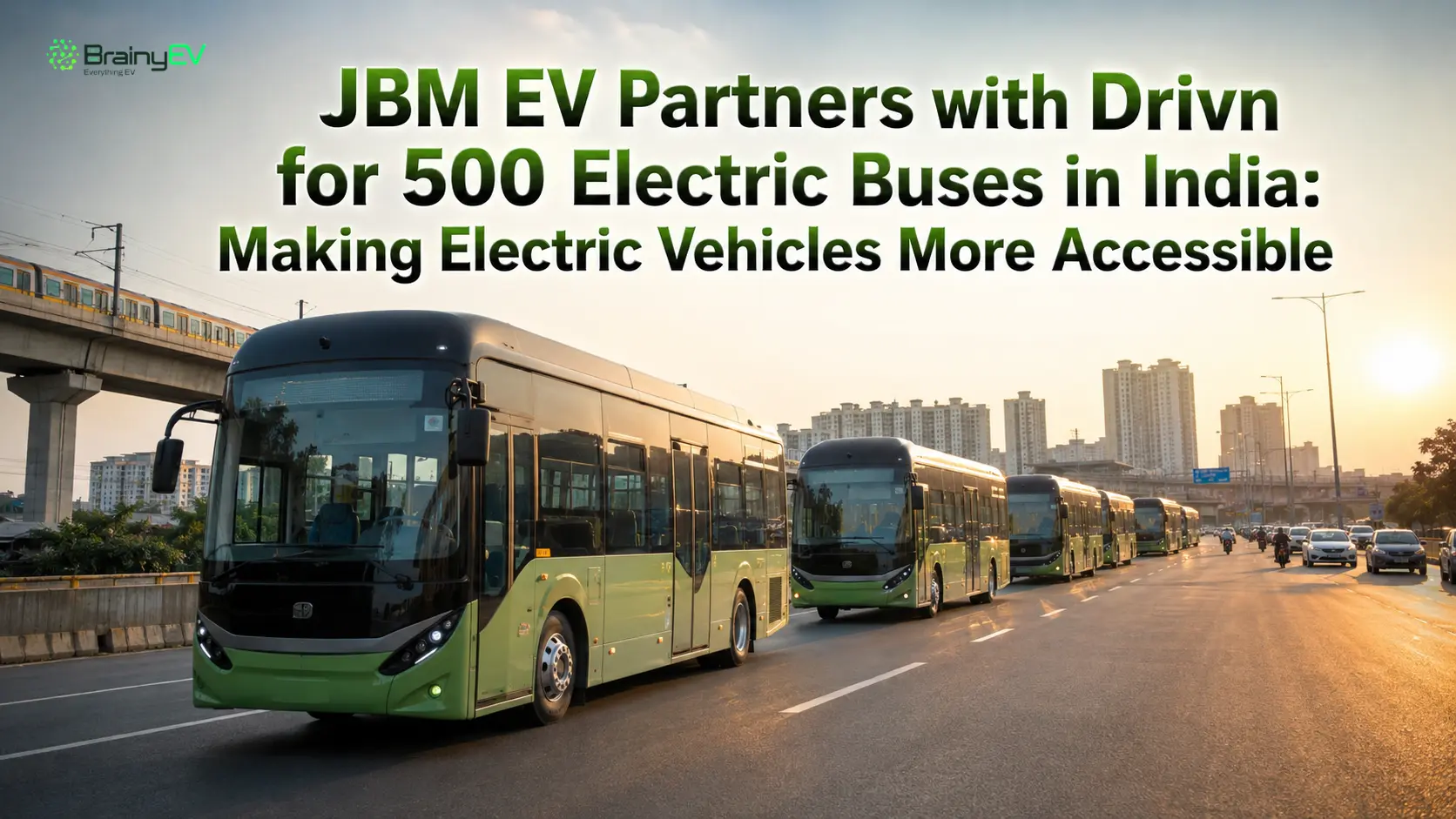
India’s journey toward cleaner public transport just took a major leap. In July 2026, JBM Electric Vehicles (JBMEV) signed a Memorandum of Understanding with Drivn, an electric commercial vehicle leasing platform, to supply 500 ultra-modern electric buses. This partnership is set to transform how fleet operators adopt electric buses in India by removing the biggest barrier: high upfront costs.
For Indians, this means more comfortable, quieter, and greener intercity travel options in the months ahead. For fleet operators, corporates, and transport businesses, it opens a practical path to switch to electric vehicles without locking up large capital.
What the Partnership Delivers
Under the MoU, JBM EV will deliver 500 electric buses in phases over the next twelve months. The first batches will focus on luxury intercity coaches. These electric buses will go to fleet operators across India and come with an integrated package that includes long-term vehicle financing, maintenance, and charging infrastructure support.
This model is designed so operators can adopt an electric bus without significant capital investment. Ownership and lifecycle management become simpler. Both companies also plan to explore school transportation, employee mobility, and airport transit services later.
Nishant Arya, Chairman of JBM Electric Vehicles, highlighted the timing: India saw a 40% growth in e-bus registrations in the first half of 2026, with 2,944 bus registrations under schemes like PM E-Bus Sewa and PM E-Drive. The partnership arrives exactly when momentum for electric buses in India is rising.
Alpna Jain, Co-founder and Chief Business Officer of Drivn, noted that commercial fleet electrification needs both technology and financial viability. Combining JBM’s manufacturing strength with Drivn’s leasing platform creates a scalable route for operators to adopt electric vehicles with confidence.
Why This Matters for Electric Buses in India
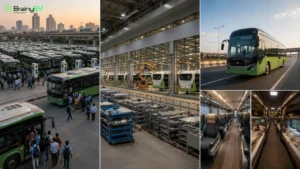
JBM’s Electric Bus Deployment, Galaxy E12 Platform, and Leasing Model for Indian Operators
JBM Electric Vehicles has been a key player since introducing its electric buses in 2018. Its track record so far:
- Over 3,500 electric buses deployed across domestic and international markets.
- 450 million electric kilometres clocked.
- 1.5 billion passengers served.
- Targeting 5,000 cumulative deliveries within the next year.
- A Delhi-NCR manufacturing facility with capacity to produce up to 20,000 buses annually.
The initial buses are expected to draw from JBM’s Galaxy e12 range, a 12-metre model popular for intercity use.
Earlier Galaxy e12 specifications:
- 250 kW permanent magnet synchronous motor.
- Top speed of 80 km/h.
- Claimed daily operational range of up to 1,000 kilometres.
- Seater (49 seats), Sleeper (30 berths), and Hybrid configurations.
- Air suspension, automatic doors, calf-support seats, USB ports, and provisions for ADAS.
JBM has since introduced a next-generation Galaxy e12 variant with a 235 kW motor and adjusted seating capacity.
Note: JBM has also separately unveiled a newer sleeper-focused Galaxy coach at Prawaas 5.0 with different seating splits, the exact configuration going to Drivn hasn’t been disclosed yet.
While exact electric bus price details for this order remain undisclosed, the leasing model directly addresses price sensitivity. Many Indian operators hesitate because of the high electric bus price and battery-related costs. By offering long-term leasing plus maintenance and charging solutions, the partnership lowers the entry barrier for electric buses and makes the total cost of ownership more predictable.
Benefits for Indian Operators and Passengers
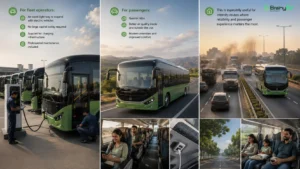
Electric Bus Leasing Reduces Costs for Fleet Operators with Charging and Maintenance Support, While Passengers Enjoy Quieter, Cleaner, and More Comfortable Journeys
For fleet operators:
- An asset-light way to expand with electric vehicles
- No large capital outlay required
- Support for charging infrastructure
- Professional maintenance included
For passengers:
- Quieter rides
- Better air quality inside and outside the bus
- Modern amenities and improved comfort
This is especially useful for intercity routes where reliability and passenger experience matters the most.
The broader impact supports India’s decarbonisation goals and JBM’s own Net Zero 2040 commitment. With strong government push through schemes and rising private-sector interest, electric bus adoption is moving from pilot projects to mainstream deployment. The focus on practical solutions also helps address concerns around electric bus price and long-term viability for operators considering an EV bus fleet.
Key Takeaways
- 500 new electric buses will roll out in phases over one year, starting with luxury intercity coaches.
- The leasing-plus-services model removes the high electric bus price hurdle for operators.
- Market momentum is strong: 40% growth in e-bus registrations in H1 2026.
- JBM already has thousands of electric buses on the road and aims for rapid further growth.
- Opportunities exist beyond intercity routes in school, staff, and airport transport.
This collaboration between a leading manufacturer and a specialised leasing platform shows how electric vehicles can scale when technology, finance, and operations work together. It makes the transition to clean mobility much more practical for Indian businesses and more comfortable for passengers.
Whether you run a fleet, plan intercity travel, or simply care about cleaner roads, this development is worth watching. For the latest insights and practical guidance on India’s electric mobility space, visit Brainy EV.