Electric vehicles are steadily moving from a premium choice to an everyday practical option for Indian families, professionals, and businesses. As EV adoption grows across cities and highways, reliable charging infrastructure is becoming increasingly important for making electric mobility convenient and accessible. The latest step from the Maharashtra government strengthens this shift by expanding accessible charging points across the state, helping address range concerns and making EV ownership more practical for a wider section of consumers. This move also supports Maharashtra’s broader transition toward cleaner, more connected, and future-ready transportation.
What’s Changing in Maharashtra’s Charging Landscape
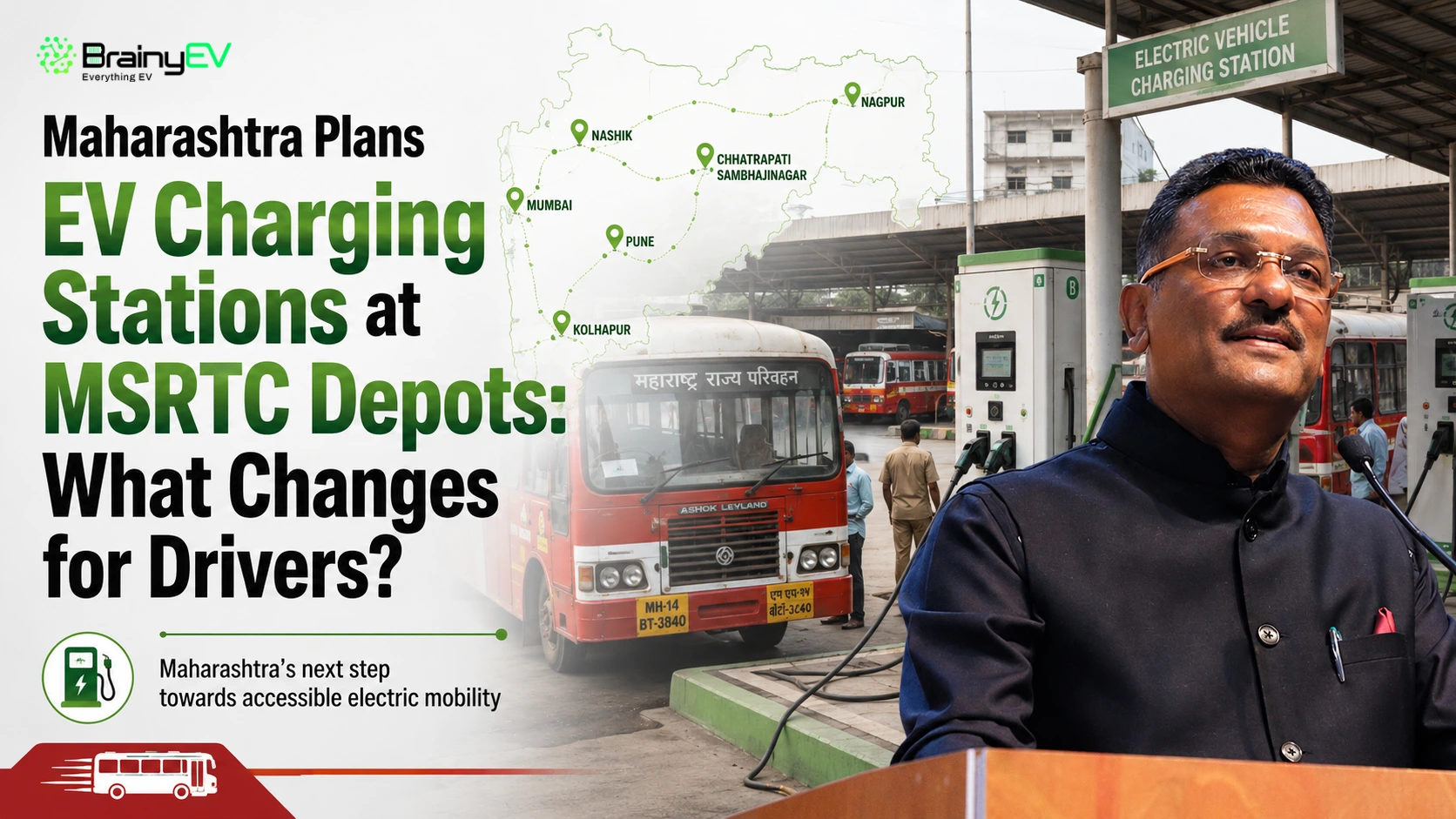
In a key announcement on August 10th 2026, the Maharashtra government revealed plans to establish EV charging stations at MSRTC depots and Regional Transport Offices (RTOs) across the state.
Speaking at an event, the transport minister Pratap Sarnaik announced the move while flagging off Tata Motors’ electric trucks at Mumbai’s Tardeo RTO. Sarnaik confirmed that the state is also considering EV charging stations at flyovers under a public-private partnership (PPP) model, involving agencies such as MMRDA, MSRDC, and PWD.
This initiative forms part of a wider effort to build a reliable EV charging network. MSRTC, which Sarnaik also chairs, aims to convert its entire bus fleet to electric by 2036. Expanding electric vehicle charging stations at MSRTC depots will support both public transport and private EV users, as many of these locations will be open to the public when not in use for buses.
How This Benefits Everyday Drivers
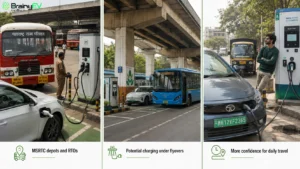
For drivers in Maharashtra, denser coverage of EV charging stations reduces range anxiety and makes longer trips more convenient. Key practical changes include:
- Greater availability of charging points at familiar government locations such as RTOs and MSRTC depots.
- Potential charging options under flyovers, turning underutilised spaces into useful stops.
- Support for the growing number of private EVs alongside the state’s public transport electrification.
These additions to the EV charging network help make clean mobility more seamless for daily commuting, inter-city travel, and commercial use.
Strong Backing from Maharashtra EV Policy and Subsidies
The expansion aligns with the Maharashtra EV Policy, which targets significant EV adoption by 2030 and offers clear financial support. Buyers can access EV subsidy Maharashtra benefits that include purchase incentives for two-wheelers, three-wheelers, commercial four-wheelers, and buses, along with 100% exemption from motor vehicle tax and registration fees. Toll waivers apply on major corridors such as the Mumbai-Pune Expressway and Samruddhi Mahamarg.
Maharashtra EV policy also encourages charging infrastructure through viability gap funding and related incentives. Together, the policy and the new plans for EV charging stations Maharashtra create a supportive environment that lowers both the cost of ownership and the practical barriers to switching.
Building a Future-Ready EV Charging Network
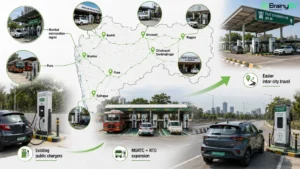
Maharashtra already has hundreds of operational public chargers under earlier central schemes, and MSRTC has been adding capacity at its depots. The fresh push for Maharashtra EV charging stations MSRTC depots, Maharashtra EV charging stations RTOs, and Maharashtra EV charging stations flyovers will accelerate coverage across urban and highway locations. The Maharashtra government planning EV charging stations at these sites signals a clear intent to make the EV charging network denser and more user-friendly.
As charging becomes easier to find and the policy support remains strong, electric vehicles are positioned to become a practical everyday choice rather than a limited option. Lower running costs, quieter operation, and cleaner air are becoming accessible to more people across the state.
If you are exploring the switch or looking for reliable EV options suited to Indian roads and usage patterns, head over to BrainyEV.