Electric vehicles (EVs) are transforming India’s roads with cleaner air and lower costs. As adoption grows, understanding the full EV battery life cycle is important for owners and the environment. This guide from Brainy EV explains what happens to EV batteries at the end of their life, covering EV battery reuse, EV battery recycling, and related opportunities in India.
The EV Battery Life Cycle Explained
The EV battery life cycle begins with manufacturing and powering the vehicle for 8-10 years or more. Most EV batteries reach the end of their primary use when the capacity drops to around 70-80%. At this point, they are no longer ideal for driving but still hold significant energy.
In India, factors like heat and daily commuting influence this timeline. Globally, similar patterns appear. For example, in places with many imported used vehicles, managing older batteries adds complexity. Once capacity falls by about 30%, batteries can shift to second-life roles instead of immediate disposal.
Wondering about your EV’s battery health? Simple habits like avoiding frequent full charges or deep discharges help extend EV battery life.
EV Battery Reuse: What Actually Happens in Second Life
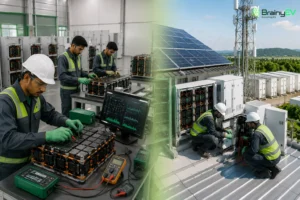
A Look at How Retired EV Batteries Are Tested, Repurposed, and Redeployed into Second-life Energy Storage Systems That Support Renewable Energy.
EV battery reuse is the preferred next step after vehicle retirement. Technicians first test each pack for remaining capacity, internal resistance, and safety. Modules or cells that pass are graded, rebalanced, and reconfigured into new stationary battery systems with updated battery management software.
These systems power solar energy storage for homes and businesses, backup units for telecom towers, and grid-scale battery storage that stabilises renewable supply. In India, examples include solar-powered EV charging stations near airports and commercial energy setups. The same batteries that once drove a car can now store daytime solar power for evening use, lasting another 5-10 years.
Is EV battery reuse better? Life-cycle studies show it is generally preferable to immediate recycling. It extracts more total energy from the same materials, lowers greenhouse-gas emissions, and provides affordable storage that supports renewable growth. For India, where energy storage demand is rising fast, EV battery reuse is a practical and sustainable option that delays the need for new mining while creating local jobs.
When Reuse Ends: How EV Battery Recycling Works
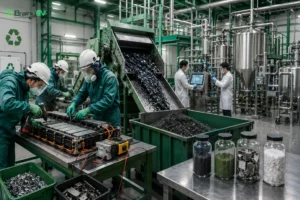
The discharge, dismantling, and recycling of EV batteries to recover valuable materials for future battery production.
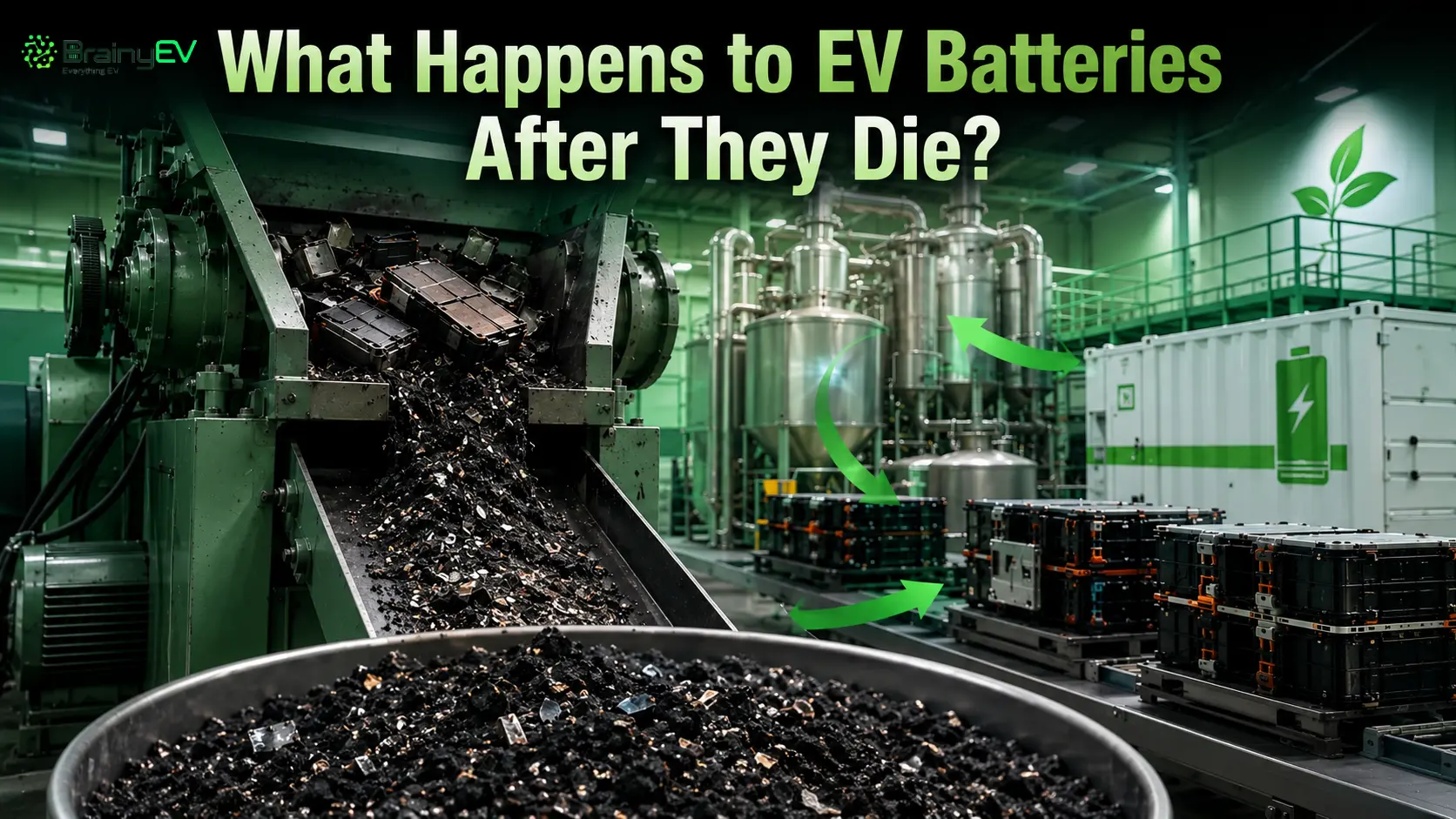
When residual capacity is too low, or safety issues appear, EV battery recycling takes over. The process starts with full discharge for safety, followed by careful dismantling of the pack. Modules are shredded into “black mass.” Valuable metals are then recovered through hydrometallurgy (chemical leaching) or other methods, achieving high recovery rates for lithium, nickel, cobalt, and graphite.
These recovered materials feed back into new battery production, closing the loop in the EV battery life cycle. India’s EV battery recycling market is expanding under Battery Waste Management Rules that set rising collection and recovery targets. Proper EV battery recycling prevents soil and water contamination and reduces import dependence on critical minerals.
Is EV battery recycling sustainable? Yes, especially when it follows EV battery reuse. Combined, the two steps form a circular system that is far more sustainable than landfilling or one-time use. Recycling alone is energy-intensive, so prioritising reuse first maximises environmental and economic benefits.
Regulations and Responsibility in India
India’s Battery Waste Management Rules enforce Extended Producer Responsibility (EPR). Manufacturers handle collection and meet rising targets for EV battery recycling and refurbishment. This promotes EV battery reuse where possible and supports the EV battery recycling market.
Importers and producers are increasingly expected to plan for end-of-life. Similar to global efforts, the focus is on industry-led solutions that avoid burdening consumers. In India, this means stronger collection networks and certified facilities.
EV battery recycling efficiency continues to improve, aiming for higher recovery rates. Policies in other regions set benchmarks, such as recycling targets by 2030, which inspire local progress.
Environmental and Economic Benefits
Responsible handling throughout the EV battery life cycle minimises risks like contamination. EV battery reuse and EV battery recycling cut emissions compared to new production. In India, this builds resource security and supports grid-scale battery storage with second-life batteries.
The EV battery recycling market offers economic potential through new jobs in processing and repurposing. As volumes grow, onshore capabilities will strengthen.
Practical Tips for EV Owners
- Maintain charging between 20-80% for better longevity.
- Return end-of-life batteries through authorised channels.
- Explore second-life energy storage options.
Considering an EV or solar setup? Visit Brainy EV for battery care guides, comparisons, and sustainable choices. Learn how EV battery reuse and the EV battery recycling market shape India’s green future.
In summary, EV batteries at the end of their life in a vehicle often gain new purpose through EV battery reuse or materials recovery via EV battery recycling. India is building systems to manage this responsibly as the fleet expands.
At Brainy EV, we help you navigate these developments with clear insights. Explore more EV resources, share your questions, and stay updated. Drive electric and support a circular EV battery life cycle!