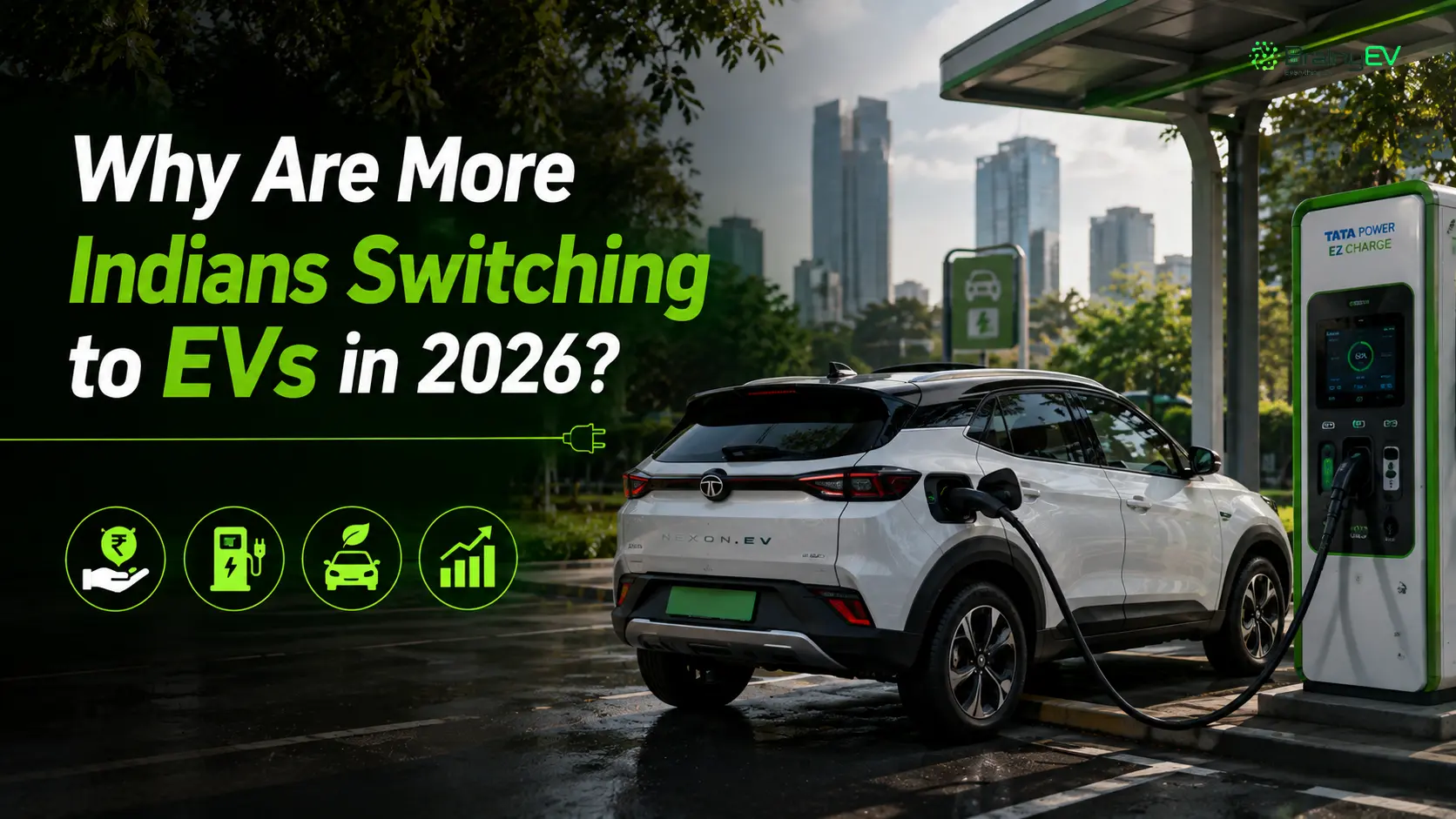
A few years ago, electric vehicles felt experimental for most Indian families. In 2026, they have become the practical, everyday choice. The electric vehicle industry in India has moved firmly into the mainstream, with buyers treating EVs as primary cars rather than secondary experiments. Elevated fuel prices, expanding model choices, dramatically lower ownership costs, and steadily improving infrastructure are accelerating the shift. Quieter drives, sharply lower monthly expenses, and fewer service headaches- this is not hype, but it is the new reality of the EV market India is experiencing right now.
The Scale of Change: Indian EV Market Growth in Numbers
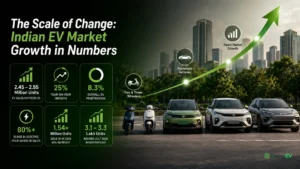
The numbers tell a clear story of acceleration. In FY2025-26, total EV sales reached around 2.45-2.55 million units, a roughly 25% year-on-year rise, lifting overall EV penetration to about 8.3%. Electric four-wheeler sales surged by over 80% in some reports. In the first half of 2026 alone, the market recorded over 1.54 million units, a 43% increase, and penetration climbed past 11%. July 2026 set a fresh record, with monthly registrations crossing 3.1-3.3 lakh units, extending the streak set in June.
Electric passenger vehicles have been a standout, with quarterly and half-yearly growth often exceeding 80%. Two- and three-wheelers continue to form the volume backbone, while more families and fleet operators are choosing cars and SUVs. This Indian EV market growth is outpacing the broader auto industry by a wide margin. The electric vehicle industry in India is no longer waiting for a tipping point; it has already passed one. New models from established and emerging players have widened choice across every price point, making the switch accessible and compelling for every kind of driver.
Everyday Advantages of Electric Cars That Add Up Fast
The strongest pull remains purely economical and daily practicality. Here are the clear advantages of electric cars that make switching the smart choice for every driver:
- Dramatically lower running costs:
Home charging typically works out to roughly ₹1-1.5 per kilometre for a mid-size EV, compared with ₹6-8 or more for an equivalent petrol vehicle. For someone covering 1,000-1,500 km a month, the monthly difference often runs into several thousand rupees. Over a few years, the savings more than offset any difference in upfront price.
- Significantly reduced maintenance:
With no engine oil changes, far fewer moving parts, and regenerative braking that extends brake-pad life, annual service costs stay meaningfully lower for every owner. The overall ownership equation firmly favours EVs for city, highway, and mixed-use driving alike.
- Zero tailpipe emissions and quieter drives:
By producing zero tailpipe emissions, electric cars contribute to cleaner urban air, and their quiet operation helps reduce noise pollution, making everyday driving more pleasant.
- Improved and convenient charging:
Charging infrastructure has improved substantially. India now has over 52,000 public charging stations, including a growing share of fast chargers, with better coverage on major highway corridors. Overnight top-ups at domestic tariffs keep the vast majority of journeys seamless, while models supporting faster DC charging make longer trips effortless.
- A superior overall driving experience:
The advantages of electric cars extend far beyond cost as they deliver a quieter, smoother, and more modern driving experience. Instant torque ensures effortless acceleration, regenerative braking improves efficiency, and advanced software updates keep the vehicle smarter and more capable throughout its lifespan.
Ready to experience the advantages of electric cars for yourself? Explore the latest models and see why the EV market India is accelerating so rapidly.
Start comparing at BrainyEV today.
Looking Ahead: Why the Momentum Continues
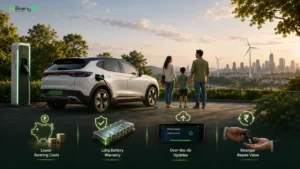
The electric vehicle industry in India benefits from a broader product pipeline, strong state-level policy support, and rising consumer comfort. Higher fuel prices in 2026 have only sharpened the financial case further.Long battery warranties, seamless over-the-air updates, and stronger resale values are among the key advantages of electric cars, making them an increasingly confident long-term choice. Switching is no longer about future-proofing alone. It’s about better economics and a more enjoyable ownership experience today.
The EV market India continues to mature, rewarding every buyer who steps into an electric vehicle. Indian EV market growth remains structural and accelerating. Whether the need is daily commuting, family travel, weekend getaways, or commercial use, the combination of lower running costs, reduced maintenance and quieter drives makes 2026 the ideal time to switch to an EV. The advantages of electric cars are no longer theoretical; they are being experienced daily on Indian roads.
The EV market India will keep expanding because the case is simply stronger on every practical measure: durability, sustainability, and long-term cost-effectiveness. Indian EV market growth reflects a clear preference for vehicles that perform better in real life.
Take the next step with confidence.
Visit BrainyEV to compare models, calculate your personal savings, plan trips with charging stops, and discover the right electric vehicle for your lifestyle. Your switch could start with a single informed click.