If you have been thinking about switching to an electric vehicle, 2026 is a particularly good time to look closely at the numbers. Across India, the combination of low GST, a nationwide registration fee waiver, and strong state-level incentives is quietly reducing the real cost of owning an EV. Understanding EV road tax exemption and related benefits is not just paperwork. It is the difference between paying thousands extra at the RTO or walking away with genuine EV cost savings.
First, the nationwide rules that apply everywhere
No matter which state you live in, two central benefits are already working in your favour. Under MoRTH Notification G.S.R. 525(E), every pure battery-operated vehicle is exempt from the fees for issuing or renewing the registration certificate. In simple words, the RC fee is zero across India. You still pay a small amount for the green HSRP plate (usually ₹400-500), but the core EV registration charges stay at zero.
On top of that, all electric vehicles attract only 5% GST. That single rate is one of the strongest EV tax benefits India continues to offer, especially when you compare it with the much higher taxes on petrol and diesel vehicles.
Road tax, however, is decided by each state. That is where the real variation in EV road tax India lives.
Which state has zero road tax for EVs right now?
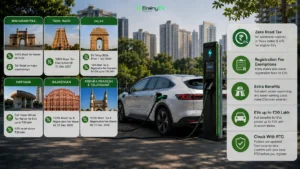
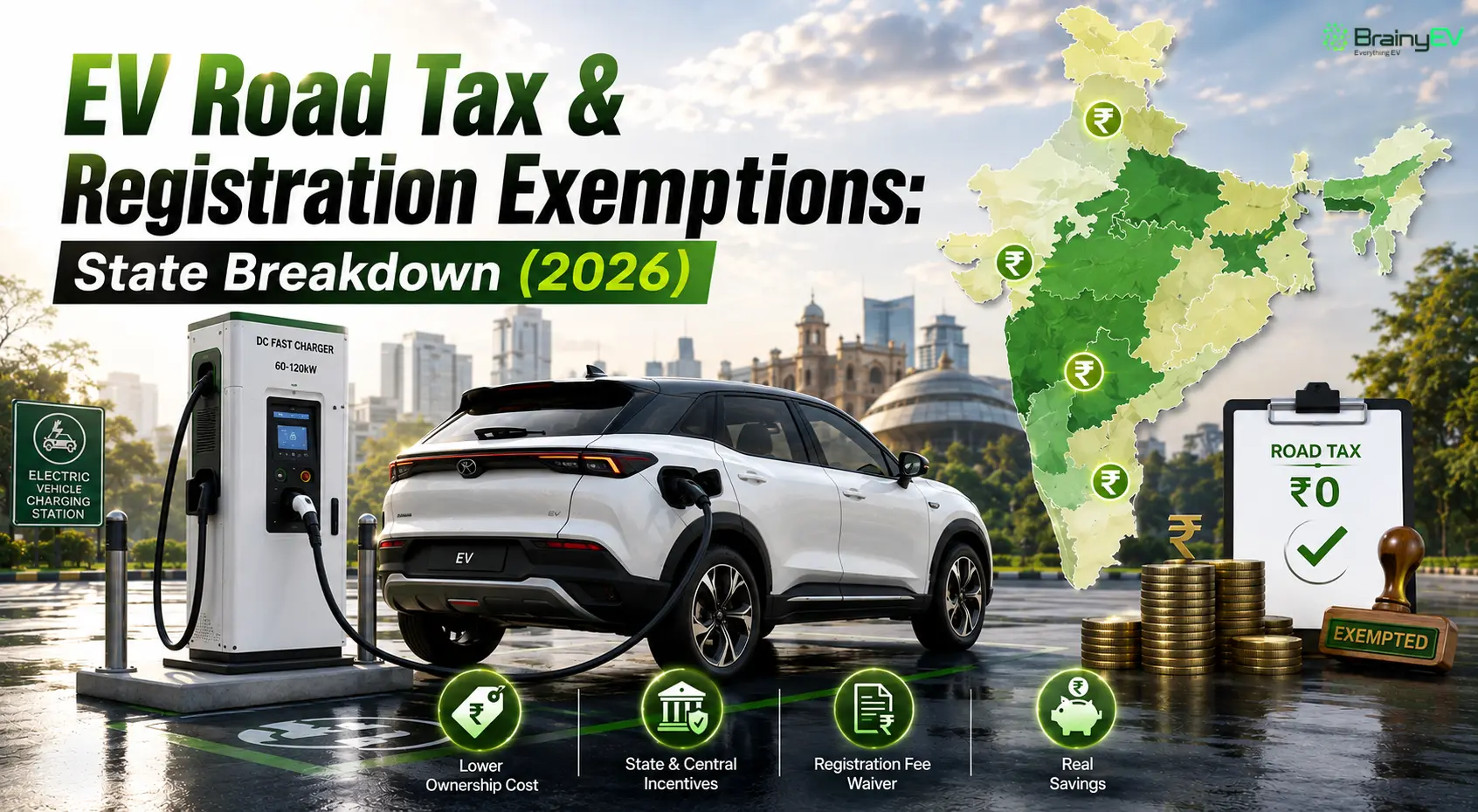
This is the question most buyers ask first when they start researching which state has zero road tax for EVs, and the answer is more encouraging than many people realise. Several states currently offer full EV road tax exemption, which means the biggest extra charge that normally sits between ex-showroom and on-road price simply disappears.
As of August 2026, these states and UTs are particularly favourable:
Maharashtra:
A 100% road tax waiver until 2030 and also offers toll relief on major expressways. Tamil Nadu has extended its 100% exemption until the end of 2027.
Delhi’s new EV Policy 2026:
In force from 1 July 2026, it gives complete road tax and registration fee exemption for electric cars priced up to ₹30 lakh.
Haryana:
Joined the list in late July 2026 with a full motor vehicle tax waiver for EVs up to ₹30 lakh and 50% relief above that.
Rajasthan, Andhra Pradesh, Telangana:
100% road tax and registration fee waivers active through December 31, 2026.
Punjab, Chandigarh, Jharkhand, Chhattisgarh, Odisha and Assam:
Provides full or near-full electric vehicle tax exemption.
In any of these places, the answer to “which state has zero road tax for EVs” is straightforward: register there, and that line item becomes ₹0. Even in states that have moved to reduced or tiered rates (for example, Karnataka’s price-based slabs or Gujarat’s nominal 1%), EV road tax India remains significantly lower than what a petrol or diesel vehicle would attract.
Always double-check the latest notification with your local RTO before you finalise, because the picture of EV road tax India does get updated from time to time. But the overall direction is clear, states are still competing to expand electric vehicle tax exemption.
Once you know which state has zero road tax for EVs, the rest of the on-road calculation becomes much simpler.
Ready to lock in these savings on a smart, reliable electric vehicle?
Explore the complete range of Brainy EV scooters and cars designed for Indian roads, and check live on-road prices with your state’s EV road tax exemption already applied.
What this actually means for your wallet
When road tax is waived, and registration fees are already zero, the gap between the advertised ex-showroom price and the amount you pay at the dealership shrinks dramatically. For most buyers, the remaining additions are mainly insurance and a modest handling charge. On a mid-range electric car this can easily translate into savings of ₹1-3 lakh compared with the road-tax burden on a similar petrol model. Add the lower running costs of electricity versus fuel, and the long-term EV cost savings become even more compelling.
These are not theoretical benefits; the electric vehicle tax exemption is applied at the RTO and reflected in the final invoice. That is why so many families who once hesitated are now finding that an EV fits their budget more comfortably than they expected.
Why the timing matters
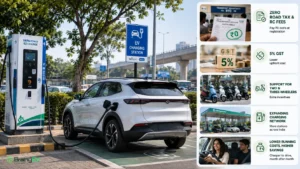
The current mix of EV road tax exemption, zero RC fees, 5% GST and remaining state or central support for two- and three-wheelers creates a practical window thanks to the EV tax benefits India provides. Charging networks are expanding, model choices have widened, and the financial case is stronger, delivering clear EV cost savings for families across the country. The system is already set up to reward the switch, you simply need to claim what is available in your state.
So if you have been waiting for the numbers to make sense, they largely do. The combination of EV tax benefits India and lower day-to-day running costs is already reducing the total cost of ownership for thousands of buyers every month.
Don’t just read about the benefits… get a personalised on-road quotation that includes zero registration charges and full EV road tax exemption where available.
Visit Brainy EV today and get a personalised on-road quotation that includes zero registration charges and full EV road tax exemption where available, and drive home your new electric vehicle with maximum savings.
The paperwork is simpler than it looks, the savings are real, and the driving experience is quieter, cleaner and more economical. The next step is simply to get a state-specific quotation and see the difference for yourself.
Related Reads: