If you own an electric vehicle, or you’re planning to buy one, the monsoon probably brings up a familiar worry: How does my EV handle heavy rain?
Waterlogged streets, sudden downpours, and weeks of humidity are simply part of life in India for a few months every year. The good news? Modern EVs are engineered to handle exactly this kind of weather. But like any vehicle, a little seasonal care goes a long way in keeping your electric vehicle safe, efficient, and rain-ready.
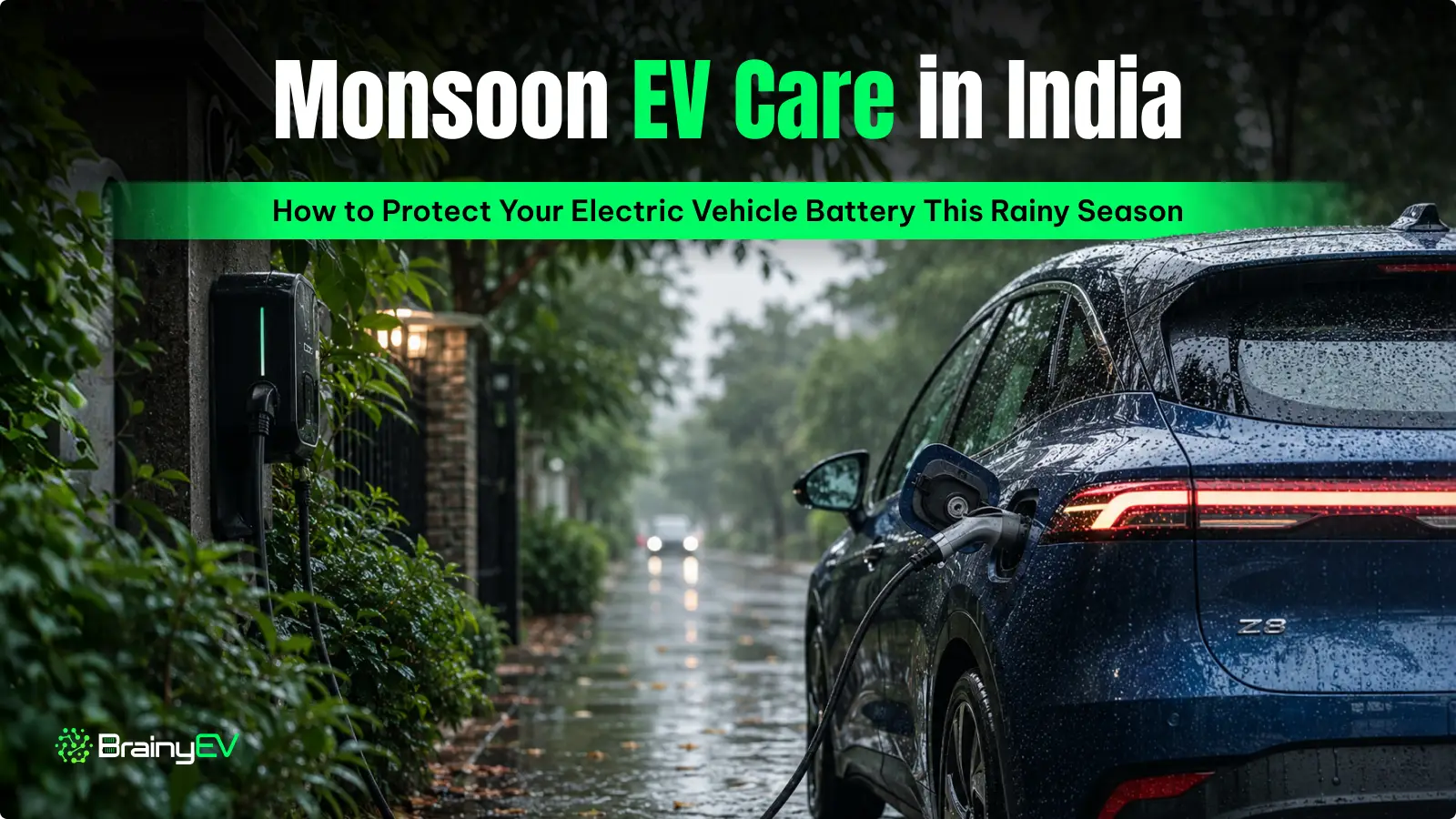
This blog covers EV monsoon care essentials, specifically how to protect your EV battery in monsoon conditions, whether you drive an EV car or ride an EV scooter.
Why EV Monsoon Care Matters for Your Battery
The battery is the single most important component in any electric vehicle. Most EVs today come with advanced waterproofing and sealed battery enclosures, but continuous exposure to heavy rain, high humidity, and fluctuating temperatures can still take a toll over time.
Moisture can gradually work its way into electrical connections, charging ports, or battery housings, especially if protective seals are worn or damaged. Left unchecked, this can lead to:
- Corrosion in connectors and wiring
- Reduced charging efficiency
- Gradual battery degradation
- Inconsistent driving range
For an electric vehicle in India, where monsoons are often heavy and prolonged, proactive battery care isn’t optional, it’s essential for long-term performance and safety.
Good monsoon habits help you:
- Prevent moisture from entering battery and electrical systems
- Avoid corrosion in connectors and wiring
- Maintain optimal range and charging speed
- Extend your battery’s overall lifespan
Don’t let rain damage your EV battery this monsoon. BrainyEV helps you choose the right protection, charging setup, and maintenance plan for your EV car or EV scooter.
Explore EV Monsoon Solutions at BrainyEV
How Electric Vehicles Actually Handle Rain
Manufacturers build modern EVs for all-weather Indian conditions, including heavy rain and waterlogged roads. Sensitive components like the battery pack, motor, and controller are protected using advanced sealing technologies.
Most EV batteries today carry IP67-rated enclosures, meaning they’re dust-tight and can withstand short submersion in water up to 1 metre.
Key monsoon-ready safety features to look for in an EV car or EV scooter include:
- IP65 or IP67-rated battery and motor enclosures
- Sealed electrical connectors and waterproof high-voltage cables
- Insulated wiring and protected control units
- Traction control and stability systems for slippery roads
So yes, it’s generally safe to drive or ride an EV in India during monsoon, as long as you follow a few basic precautions. But “safe” doesn’t mean “ignore the water.” Deep water crossings, flooded streets, and prolonged exposure to standing water can still cause damage, particularly if seals are aged or compromised.
Protecting Your EV Battery During Monsoon: Practical Steps
- Avoid Deep Water and Flooded Roads
Even well-sealed EVs shouldn’t be driven or ridden through deep water unnecessarily. Water entering the charging port, battery housing, or underbody connectors can affect performance over time.
During heavy rainfall:
- Choose alternative routes to avoid known waterlogging spots.
- Slow down on wet roads to reduce splash and the risk of hidden potholes.
- Avoid riding or driving through stagnant or flooded water altogether.
- Park in Dry, Elevated, and Covered Areas
Where you park your EV during the monsoon directly affects battery health. Always try to park in a dry, covered, and well-ventilated spot. Avoid leaving your vehicle exposed to rain or parked in damp basements for long hours.
If outdoor parking is unavoidable:
- Use a high-quality, water-resistant and heat-resistant cover
- Choose elevated spots that don’t collect water
- Avoid parking under trees, where falling branches or fruit can cause damage
This is especially important for EV scooter owners, where proper storage is often overlooked but makes a real difference.
- Clean and Dry Your EV Regularly
Dirt, mud, and moisture tend to build up on the body, undercarriage, and around electrical components during monsoon. After riding or driving in the rain, wipe down your EV with a soft cloth, paying special attention to the battery housing, charging port, and connectors.
Avoid using high-pressure water jets near battery compartments or wiring, as this can force water into sensitive areas rather than clean them. Regular, gentle cleaning helps prevent corrosion and electrical faults, a simple but often-missed part of EV battery maintenance during monsoon.
Building Better Monsoon Habits, One Step at a Time
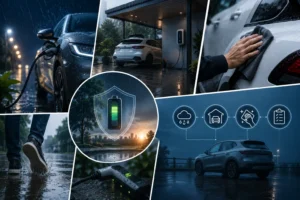
None of this requires expensive add-ons or major lifestyle changes. It’s mostly about awareness. Knowing where water tends to collect on your daily route, choosing your parking spot with a little more care, and giving your EV a quick wipe-down after a wet ride.
Over a full monsoon season, these small, consistent habits are what actually protect your investment. A battery that’s kept dry, clean, and free of corrosion will simply perform better and last longer, whether you’re commuting daily in Mumbai’s rains or navigating Delhi’s sudden downpours.
If you’re unsure whether your current EV setup, covers, parking arrangement, or cleaning routine is doing enough to protect your battery this season, it’s worth getting a second opinion before the rains intensify.
Want a monsoon-ready EV battery health check?
BrainyEV offers expert guidance, tailored maintenance plans, and accessories designed for Indian monsoon conditions.
Get Your Free EV Monsoon Guide from BrainyEV
Want more monsoon EV safety tips? Explore our complete guide on EV Charging in the Rain: Safety Tips, Charger Setup and Monsoon EV Guide to learn about safe EV charging, monsoon driving tips, charger setup, waterproof charging equipment, and best practices for protecting your electric vehicle during the rainy season.
FAQs
1.Is it safe to drive an electric vehicle in the rain in India?
Yes. Modern EVs are built with sealed battery enclosures, insulated wiring, and IP65/IP67-rated components designed to handle heavy rain and waterlogged roads. That said, driving through deep or standing water for long periods should still be avoided, as prolonged exposure can affect seals over time.
2.Can monsoon rain damage my EV battery?
Not under normal conditions. EV batteries are designed to resist water ingress. However, continuous exposure to heavy rain, high humidity, or driving through deep water can gradually wear down seals and connectors, leading to corrosion or reduced battery efficiency if proper care isn’t taken.
3.What does the IP rating on my EV battery actually mean?
IP (Ingress Protection) ratings indicate how well a component resists dust and water. Most EV batteries carry an IP67 rating, meaning they’re fully dust-tight and can withstand accidental submersion in up to 1 metre of water for a short duration, but this isn’t the same as being safe for prolonged submersion or deep flooding.
4.Where should I park my EV during monsoon?
Always choose a dry, covered, and well-ventilated spot. If indoor or covered parking isn’t available, use a water-resistant and heat-resistant cover, park on elevated ground, and avoid parking under trees where falling branches or debris could cause damage.
5.How often should I get my EV battery checked during monsoon?
It’s a good idea to have your battery, connectors, and seals inspected at least once before monsoon season begins, and again midway through if you’re riding or driving daily in heavy rain. Regular checks help catch early signs of corrosion or moisture damage before they become bigger issues.