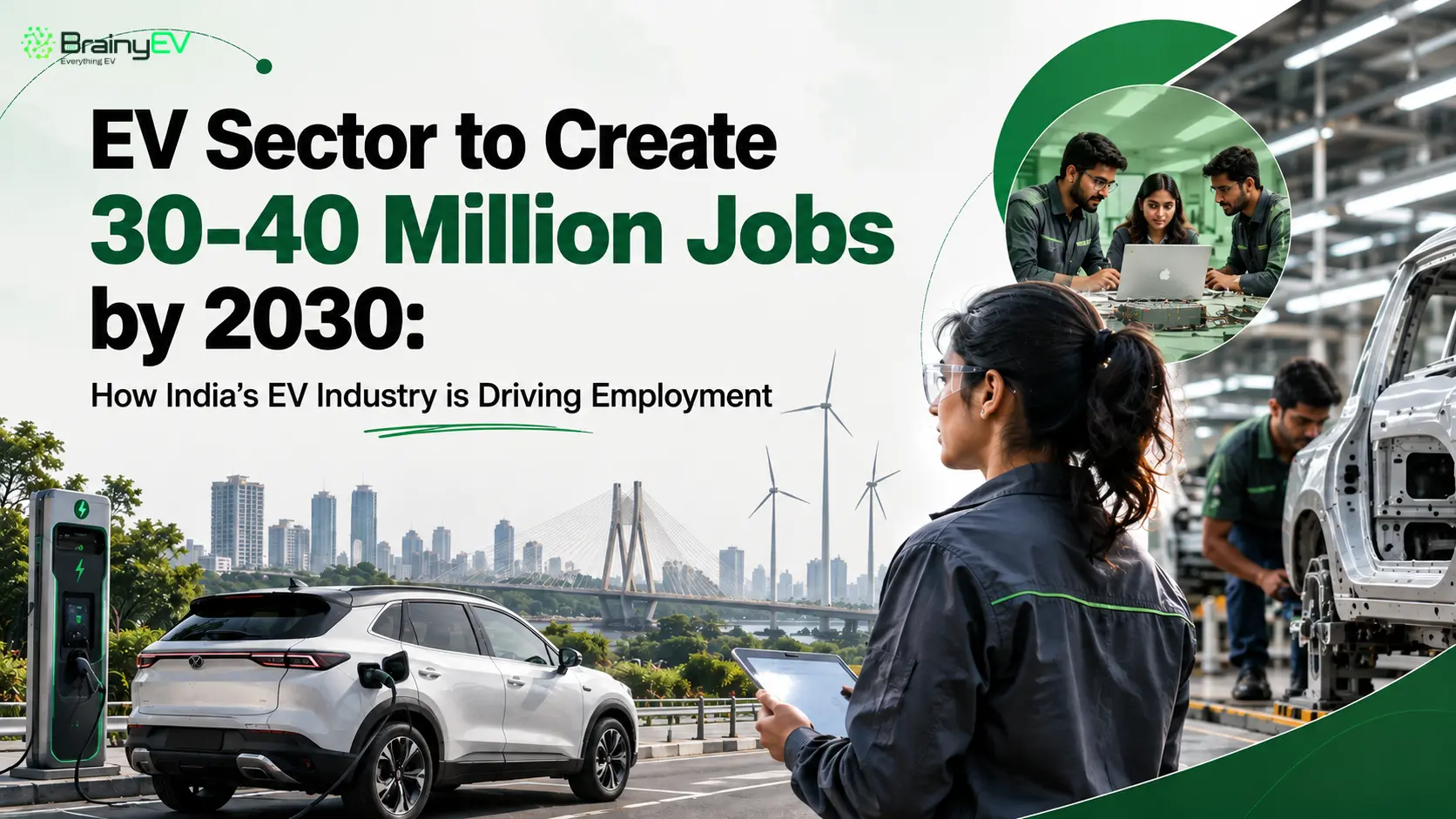
India’s EV sector is entering its most employment-intensive phase. According to a recent Adecco India report based on insights from over 100 companies, the EV sector is projected to create 30-40 million jobs by 2030. Of these, 10-15% will be direct roles and 85-90% indirect. Hiring is expected to grow 15-20% year-on-year, driven by demand for specialised talent in engineering, energy systems and battery technologies. This surge highlights the rapid growth of jobs in EV sector across the country.
A Full Industrial Ecosystem, Not Just Factories
Adoption of electric vehicles in 2026 is rising across passenger cars, commercial fleets, two-wheelers and public mobility. This is turning the electric automobile industry from a pure manufacturing opportunity into a complete industrial ecosystem. The EV sector is no longer limited to vehicle assembly alone.
India currently contributes 4% to the global passenger EV market and holds a 17% share in two-wheelers. The bigger long-term opportunity for the electric automobile industry lies in capturing a larger share of the global value chain. Electric vehicles in 2026 are already reshaping both demand and supply chains.
Where the Jobs Are Concentrated
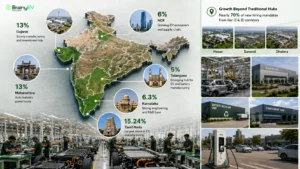
Manufacturing remains the biggest employment engine in the EV sector, accounting for 50-55% of total demand. Most of this activity is still focused in established automotive hubs:
- Tamil Nadu – 15.24%
- Maharashtra – 13%
- Gujarat – 13%
- Karnataka – 6.3%
- NCR – 6%
- Telangana – 5%
Growth is also moving beyond these traditional clusters. Nearly 70% of new hiring mandates in the EV sector are expected to originate outside conventional hubs, with investment flowing into tier-II and III corridors such as Hosur, Sanand and Dholera. Gigafactories, component parks, battery recycling units and supplier networks are creating fresh employment zones. These developments are accelerating the growth of jobs in EV sector across new regions.
Key Segments Driving Employment
The Products and Parts segment is projected to account for 40-45% of hiring within the electric automobile industry. Demand is spreading well beyond OEMs and tier-I suppliers into tier-II and III MSMEs and startups.
Key focus areas include:
- Battery cells
- Motors and controllers
- Semiconductors
- Power electronics
Battery recycling has grown at a 55% CAGR between FY22 and FY26 and has become one of the fastest job-creating spaces in the EV sector. Talent demand in EV infrastructure is expected to rise 45% over the next 10 years. This trend is strengthening jobs in EV sector at every level of the value chain.
Policy Push and National Gains
States are shifting from incentive-driven adoption to industrial-scale hiring. Delhi’s Rs 7,000-crore EV Policy 2026 and its subsidy portal are clear examples of this transition for electric vehicles in 2026.
This growth in the EV sector, backed by the Make in India initiative, will:
- Reduce crude oil import dependence
- Strengthen energy security
- Support India’s Net-Zero target by 2070
- Create opportunities across tier-II and III regions
The electric automobile industry is now positioned as a major contributor to both employment and energy goals.
Specialised Roles in Demand
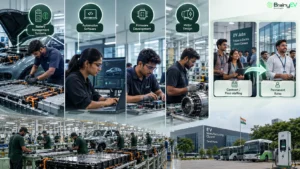
The next decade will be defined less by assembly-line jobs and more by specialised skills. Roles seeing strong growth in the EV sector include Battery Management Systems, automotive software, firmware development and motor design.
Around 40-50% of the new hiring wave is expected to start as contractual or flexi-staffing roles before converting to permanent positions. This pattern is typical of high-growth phases in the electric automobile industry and is further helping boost jobs in EV sector.
Ready to explore the latest electric vehicles in 2026?
Visit BrainyEV to compare models, check real-world running costs and find nearby chargers. Clear data and practical tools make the switch simpler.
Why This Matters for Buyers
A stronger domestic supply chain, expanding charging infrastructure and rising skilled employment all point to a more mature and reliable market for electric vehicles in 2026. For buyers, this means better model choices, improving support networks and clear long-term savings on running costs. The EV sector continues to deliver tangible benefits.
The EV sector in 2026 is already delivering jobs, industrial growth and cleaner mobility. India’s electric automobile industry is no longer a future story. It’s happening now. The continued expansion of jobs in EV sector helps reinforce this momentum.
Ready to join India’s EV Revolution!
As India’s EV sector continues to create millions of jobs and reshape the country’s mobility landscape, staying informed has never been more important. Whether you’re exploring the latest electric vehicles in 2026, tracking industry developments, comparing models, understanding EV technology or finding nearby charging stations, BrainyEV brings everything together in one place.
Head over to BrainyEV today and take the next step towards smarter electric mobility.
You might also like:
Why Are More Indians Switching to EVs in 2026?
What Happens to EV Batteries After They Die?