Buying an electric car in India in 2026 is a practical and rewarding decision for almost any driver. With EV registrations having crossed a crore and public charging points past 52,000, the ecosystem has matured. Whether your journeys are short city hops, regular family runs, or occasional long drives, an electric car now delivers clear advantages in cost, convenience, design, space, sustainability, and everyday lifestyle. Here are the practical things to know before buying an electric car that help you choose with confidence.
1. How to find an electric car that fits your needs?
One of the most useful things to know before buying an electric car is that modern models suit light daily use and longer trips equally well. Design, cabin space, comfort, and practical storage often matter more to first-time buyers than any single number. Real-world EV range has improved across compact cars and mid-size SUVs, so you simply select the battery size that fits your routine without feeling restricted.
2. How developed is EV charging infrastructure India today?
EV charging infrastructure India has expanded steadily, with more than 52,000 public stations and over 16,500 fast chargers concentrated in cities and along major highways. Checking apps for stations near home, office, and frequent destinations is a sensible thing to do before buying an electric car. The growing EV charging infrastructure India supports both personal cars and wider electric mobility, making home charging the convenient daily backbone while public options continue to improve.
3. How convenient and economical is home charging for most owners?
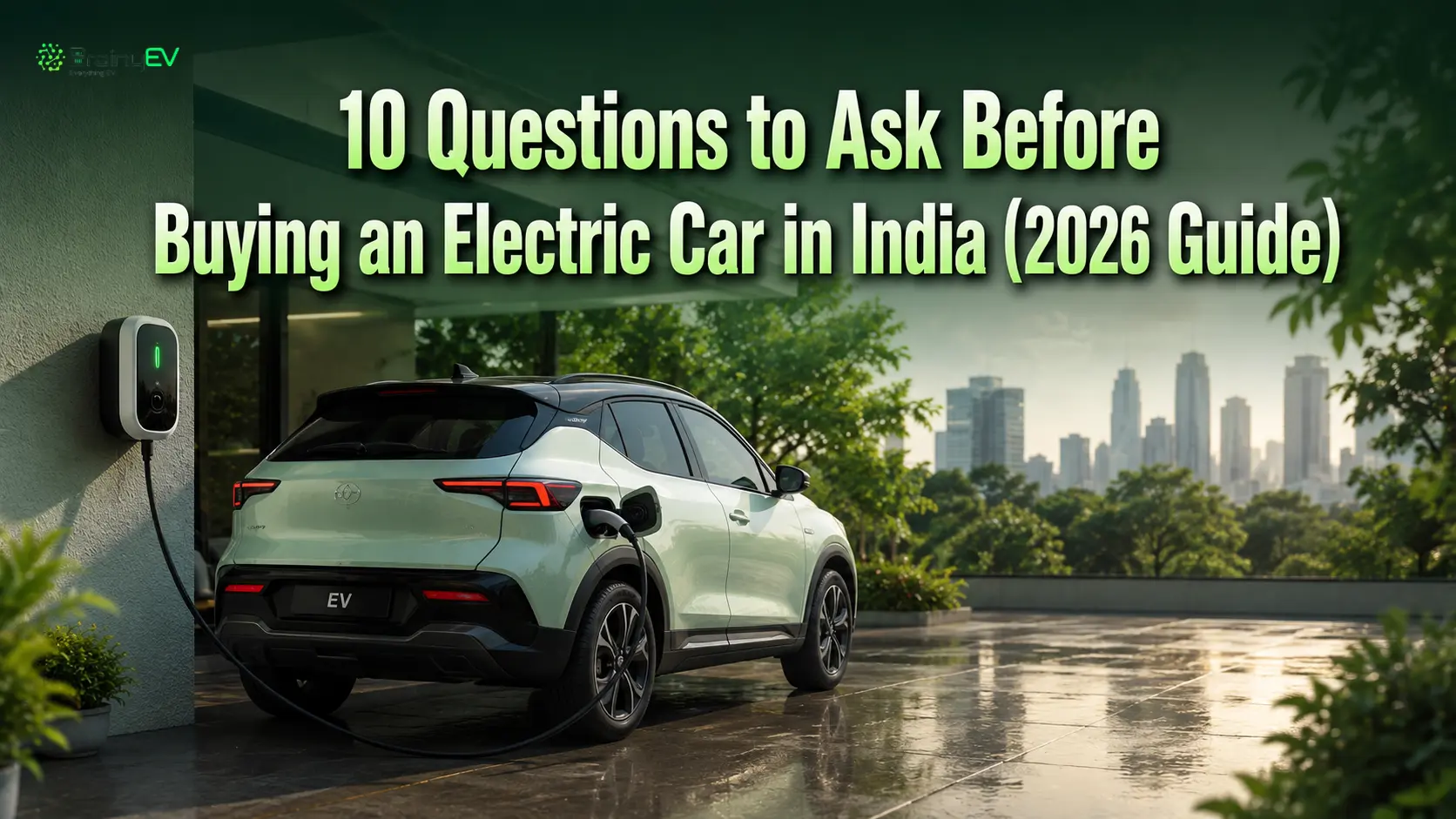
Most electric cars arrive with a portable charger that works on a dedicated socket and tops up overnight. A wallbox further shortens the wait. Confirming sanctioned load and society permissions is among the practical things to know before buying an electric car, especially for apartment residents. Once set up, waking up to a full battery becomes a quiet lifestyle upgrade that works for every driving pattern.
4. How useful is real-world EV range when choosing a model?
Brochure figures look impressive, yet real-world EV range under mixed Indian conditions with air-conditioning typically delivers usable daily capability across popular models. Compact options and mid-size SUVs now offer real-world EV range that covers city commuting and weekend trips comfortably. Test-driving with the air-conditioner on lets you experience real-world EV range in the conditions you actually face, so the number becomes one helpful reference rather than a limiting factor.
5. What exactly does the EV battery warranty cover?
Most brands provide an 8-year or 1,60,000 km EV battery warranty (common amongst most EV brands but not universal) with a guaranteed minimum state of health. Some manufacturers extend coverage even further for the first private owner. Understanding exactly what the EV battery warranty covers, capacity threshold, transfer conditions, and any notes on charging habits is an important thing to know before buying an electric car. Asking for the written EV battery warranty card removes uncertainty and protects long-term value.
6. How long can you expect modern EV battery life to last under Indian conditions?
Contemporary liquid-cooled packs and LFP chemistry deliver strong EV battery life, often stretching 10-15 years or well beyond 2 lakh km with normal care. Average degradation stays modest when the battery is treated sensibly. Simple habits such as avoiding prolonged full charge when parked and preferring AC charging for daily top-ups help preserve EV battery life. This reliable EV battery life supports both light personal use and more intensive driving without early concern.
7. How much lower is the typical EV maintenance cost?
One of the strongest ownership advantages is the reduced EV maintenance cost. Annual scheduled service usually covers filters, fluids, alignment, and software checks at a fraction of conventional vehicle expense. Over five years, many owners experience markedly lower EV maintenance cost because there is no engine oil, no clutch, and regenerative braking extends pad life. Factoring in this favourable EV maintenance cost makes the overall picture even more attractive across different usage patterns.
8. What should you know about EV insurance costs?
Comprehensive cover for mid-size electric cars commonly falls in a practical range in the first year. A mandated discount on the third-party component helps, while battery-protection and zero-depreciation add-ons address the higher value of the pack. EV insurance cost depends more on insurer choice and selected covers than on any fixed premium gap. Understanding typical EV insurance cost and useful add-ons is another practical point among the things to know before buying an electric car.
9. Which government incentives for EVs still apply in your state?
Four-wheelers continue to enjoy 5% GST along with widespread road-tax and registration waivers. Many states still offer additional purchase benefits or scrappage support. Reviewing the latest government incentives for EVs on your state transport portal before negotiating the on-road price can meaningfully lower the final bill. These government incentives for EVs remain a useful part of the ownership calculation and reinforce the financial case.
10. How strong is the service network and long-term support?
Fewer moving parts mean fewer workshop visits, yet accessible authorised centres for software updates and high-voltage work matter. Asking about the nearest service point and typical turnaround times completes the list of useful things to know before buying an electric car. Brands increasingly deliver over-the-air updates, and the combination of solid EV battery warranty, proven EV battery life, and expanding EV charging infrastructure India gives lasting confidence.
Why an electric car fits almost every lifestyle
Electric cars deliver quieter, smoother, and cleaner travel. Zero tailpipe emissions improve local air quality while lower energy use and reduced EV maintenance cost free up household budgets. Modern designs prioritise comfort, space, and technology that make daily life easier. Real-world EV range, dependable EV battery life, clear EV battery warranty terms, manageable EV insurance cost, and continuing government incentives for EVs all point in the same direction: an electric car is ready for every kind of driver in 2026.
The decision centres on design, space, ownership costs, and environmental benefits rather than any single restriction. Visit BrainyEV to compare real-world running costs, explore the expanding EV charging infrastructure India, and plan every step with confidence.
FAQs
What should I focus on first when considering an electric car?
Design, cabin space, comfort, and how the vehicle fits your routine rank high for most first-time buyers. Real-world EV range, EV battery warranty details, and overall ownership costs then help confirm the match.
How has EV charging infrastructure India developed?
It is significantly stronger than a few years ago, with more than 52,000 stations and growing fast-charger density. Home charging remains the most convenient daily solution for the majority of owners.
Does the EV battery warranty protect against normal degradation?
Yes, down to the stated capacity threshold. The written EV battery warranty clarifies the exact terms and any transfer conditions.
Is EV maintenance cost really lower?
Yes. Routine servicing is typically far less expensive than a comparable petrol or diesel car, delivering clear long-term savings.
Are government incentives for EVs still available?
Yes. GST benefits, road-tax waivers, registration relief, and various state-level government incentives for EVs continue to reduce the on-road price in many places.
An electric car works best when the practical details, real-world EV range, EV battery life, EV maintenance cost, EV insurance cost, EV battery warranty, EV charging infrastructure India, and government incentives for EVs, align with your life. Answer these points honestly against your needs, and the advantages will become clearer.
Related Reads:
45°C Outside, Ice-Cold Battery Inside? Here’s What Extreme Heat Actually Does to Your EV in India
How to Evaluate Real-World EV Range in India
Do EVs Really Reduce Carbon Footprint in India?