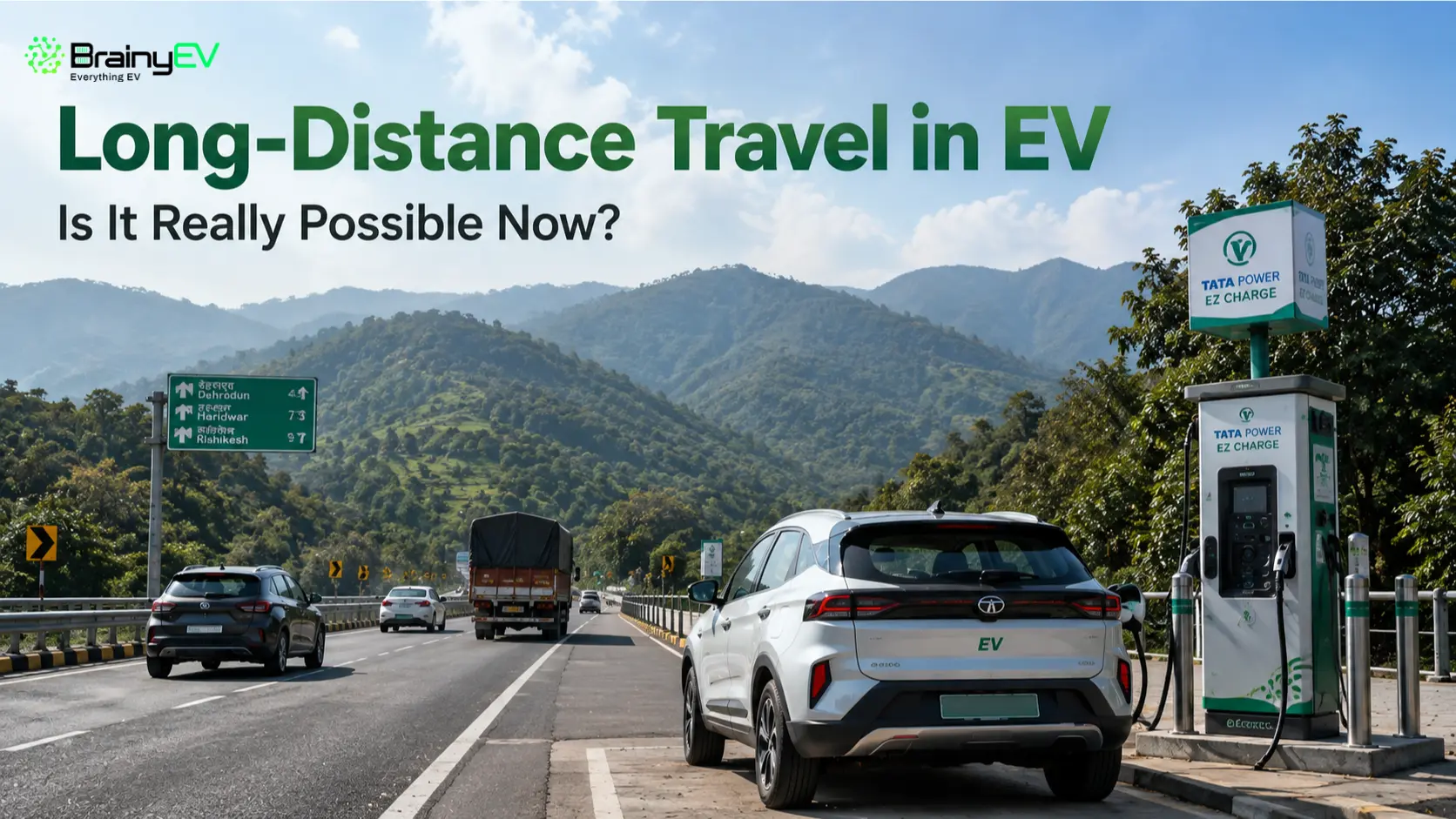
Yes. Long-distance travel in an EV is practical and increasingly routine across India in 2026.
Thousands of owners of electric cars in India regularly cover 500-2,000+ km trips on national highways. The charging network has expanded rapidly, real-world ranges of modern electric vehicles have improved, and planning tools make the process straightforward. Range anxiety in electric vehicles has dropped sharply for most drivers who plan a few basic steps.
This guide is written for Indian drivers who want clear, practical information on using electric cars and EV cars in India for road trips.
The Current Charging Picture in India
The secret to stress-free highway travel isn’t just finding a single charger, but picking charging hubs that offer multiple fast-charging guns and on-site amenities like restaurants or rest stops.
India now has over 52,700 public EV charging stations, including more than 16,500 fast chargers suitable for cars. Roughly 91% of national highways have a charger within about 50 km. Major corridors such as NH-48 (Delhi-Jaipur-Ahmedabad), Mumbai-Pune, Bengaluru-Mysuru, and parts of NH-44 are well covered with DC fast chargers.
Popular networks include Tata Power EZ Charge, Statiq, ChargeZone, BPCL, and Jio-bp. These operators have placed chargers at highways, fuel stations, malls, and hotels. Fast charging (typically 30-150 kW, CCS2) can add significant range in 25-45 minutes.
Electric vehicles and electric cars in India benefit from this growth. Home charging remains the primary method for most owners, while public stations support longer journeys.
Real-World Range of Popular Electric Cars
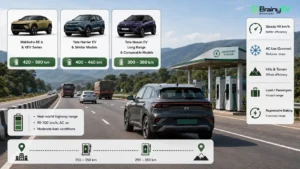
Claimed ARAI ranges often exceed 450-650 km on many current models. Real-world highway figures for popular EV cars in India typically fall in these ranges under mixed conditions (90-100 km/h, AC on, moderate load):
- Mahindra BE 6 and XEV series: often 420-500 km
- Tata Harrier EV and similar: around 400-460 km
- Tata Nexon EV long-range and comparable models: 300-380 km depending on conditions
Speed, AC use in summer, hills, and load affect range. Driving at a steady 90 km/h instead of 110-120 km/h usually improves efficiency. Regenerative braking helps on downhill stretches common in Indian terrain.
These numbers make intercity travel feasible with planned stops.
Planning Your EV Road Trip: Practical Steps
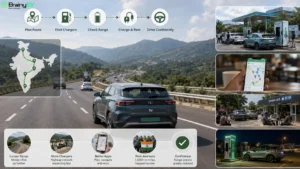
1. Map chargers first
Use apps such as Tata Power EZ Charge, Statiq, Bolt, Earth, ChargeZone, or PlugShare. Check real-time availability and recent user reports. The plan stops every 150-250 km on major routes and keeps a 15-20% battery buffer.
2. Align charging with natural breaks
Stop for meals or rest while the EV charges. A typical 20-80% DC fast charge takes 25-45 minutes.
3. Accounting for Indian conditions
High summer temperatures increase AC use. Pre-cool the cabin while plugged in when possible. In hills or monsoon, reduce planned leg distances slightly and top up more frequently.
4. Carry essentials
Compatible cables, a 16A extension if needed, and offline maps. Confirm hotel or destination charging in advance for overnight stays.
5. Drive efficiently
Use eco mode, maintain steady speeds, and rely on regenerative braking. This maximises the range of electric cars on highways.
These steps work well for trips to Goa, Rajasthan, Himachal, Kerala, or longer routes such as Delhi-Bengaluru or Mumbai-Hyderabad.
Planning an EV road trip? Start with the right information.
From real-world EV range and charging infrastructure to ownership costs and road-trip planning, BrainyEV brings the information you need to make smarter EV decisions.
Explore BrainyEV before you hit the highway.
Addressing Range Anxiety in Electric Vehicles
Range anxiety in electric vehicles was once the biggest concern. Today, the combination of longer battery packs, denser highway chargers, and reliable apps has reduced it for most users of electric cars in India.
Drivers report that after a few trips, the worry largely disappears. Real examples include multi-thousand-kilometre journeys across states using only public chargers. Owners of EV cars in India routinely complete 1,000+ km drives by following the planning steps above.
The network continues to expand under government support and private investment, further improving confidence for long-distance travel in electric vehicles.
Cost of Long Trips
Public DC fast charging usually costs ₹15-25 per kWh. On a typical mid-size EV this translates to roughly ₹2.5-4 per km for highway charging. Home charging is significantly lower. Many drivers mix both and find overall running costs attractive for regular travel.
Useful Apps for EV Drivers in India
- Tata Power EZ Charge
- Statiq
- Bolt.Earth
- ChargeZone
- BPCL Pulse / Jio-bp
- PlugShare (for community updates)
Download two or three and keep accounts ready with payment methods linked.
Why Long-Distance EV Travel Is Becoming Easier
Long-distance travel in an EV is possible and practical for most routes in India nowadays. The charging network covers the majority of national highways, modern electric cars deliver usable real-world range, and simple planning removes most uncertainty. Range anxiety in electric vehicles continues to decline as infrastructure and vehicle capability improve.
Electric cars in India and EV cars in India are already supporting everyday highway journeys for thousands of families. With basic preparation, your next road trip can be quiet, smooth, and straightforward.
Ready for your next EV road trip?
Plan smarter with BrainyEV. Get reliable insights on EV range, charging infrastructure, running costs, and road-trip planning, so you can hit the highway with confidence and not just range anxiety.
Explore BrainyEV and make your next EV journey a smarter one.
Frequently Asked Questions
Is long-distance travel in an EV realistic on Indian highways in 2026?
Yes. With chargers available on roughly 91% of national highways at about 50 km intervals and growing fast-charger numbers, planned trips of 500-2,000 km are common.
How do I reduce range anxiety in electric vehicles?
Plan to stop using live apps, keep a 15-20% buffer, drive at moderate speeds, and use eco modes. Experience on the first few trips usually removes the concern.
Which apps help locate chargers for electric cars in India?
Tata Power EZ Charge, Statiq, Bolt, Earth, ChargeZone, and PlugShare are widely used and reliable for route planning.
What real-world range should I expect from popular EV cars in India?
Most current models deliver 300-500 km on highways depending on the battery size, speed, and conditions. Check specific model data and community reports for your car.
Can I take an EV to hill stations or remote areas?
Yes, on many popular routes. Plan extra stops, confirm destination charging, and maintain higher reserves on stretches with fewer chargers.
Electric vehicles and electric cars continue to become more convenient for the kind of travel Indian families actually do. Proper planning turns long-distance EV travel into a normal, enjoyable experience.
You might also like:
Your EV in Extreme Heat Conditions in India